


22 March 2023
Is it possible to use wastewater treatment plant waste to obtain bioenergy, biofertilizers, and bioplastics?
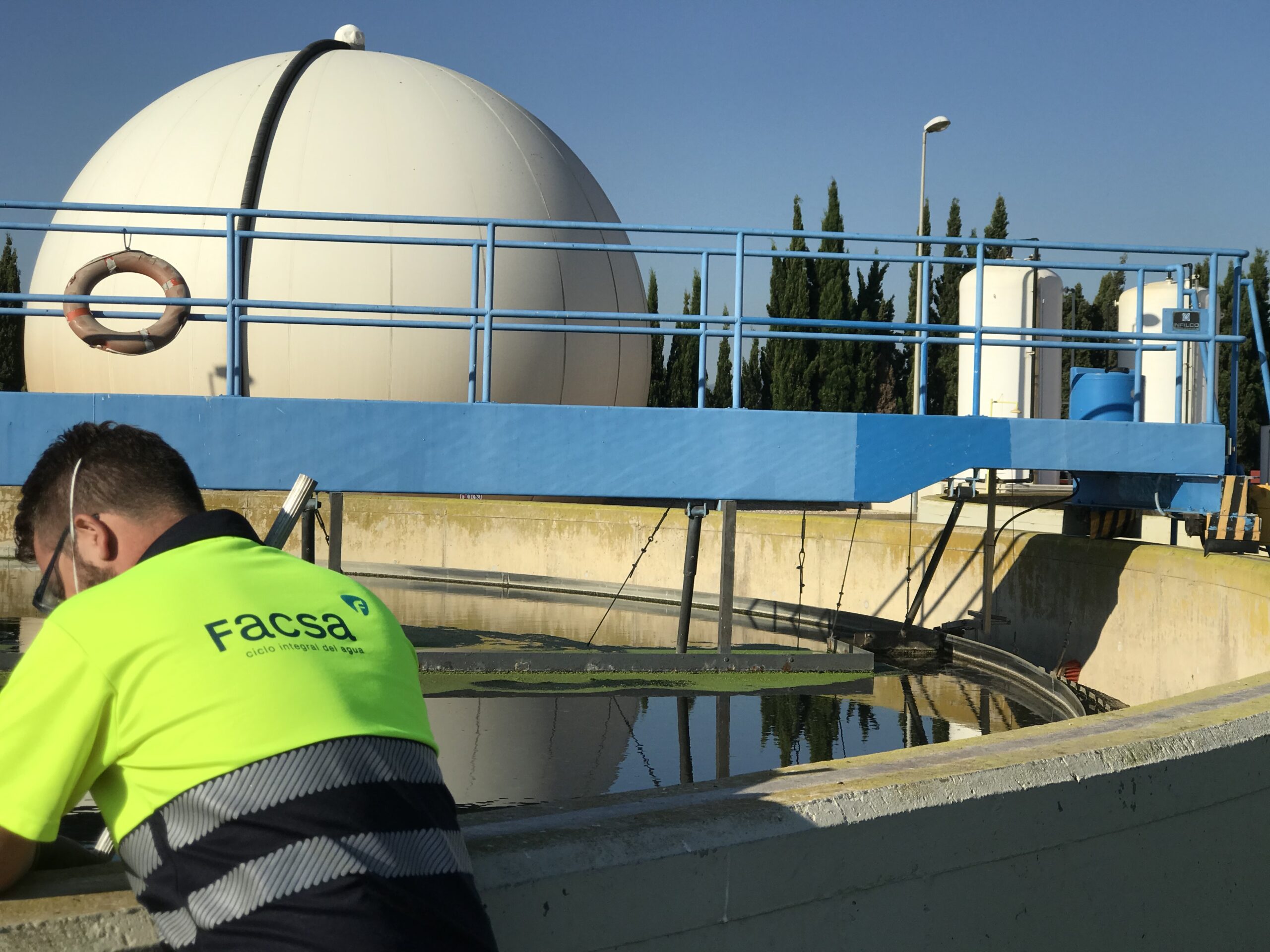
The water sector is a key player in achieving a more sustainable socioeconomic system. Its commitment and actions go far beyond guaranteeing the availability and sustainable management of water and sanitation for all (Sustainable Development Goal 6). It also makes a significant contribution to climate action, the protection of natural resources, public health, and the creation of more sustainable cities and environments, for example, by transforming our main facilities into biofactories.
Accelerating the shift towards more sustainable environments and a true circular economy
FACSA invests significant resources in research and implementation of cutting-edge technical and technological advances so that water treatment plants, historically considered black boxes, become a source of green and renewable energy that helps decarbonize, for example, industry and transport, as well as a source of biofertilizers and regenerated water for agriculture; ultimately, a boost towards a green and blue economy.
Thus, for more than 10 years, the company has been working on a much more sustainable and resource-generating wastewater treatment plant model, focusing on innovation projects related to the bioeconomy and biorefineries—a vision that goes beyond biogas and reclaimed water, where the sector is currently concentrated. “Accelerating change,” the slogan selected by the United Nations for World Water Day, reflects its commitment to undertaking the necessary changes to achieve a true circular economy in which all available resources are given a second life.
From wastewater treatment plants to biorefineries
Experts estimate that in the next 10 years, traditional wastewater treatment plants (WWTPs) will be renamed biorefineries because they will produce high-quality fuels, fertilizers, and reclaimed water for industry, agriculture, and many other productive sectors. This shift in the model responds to social and business movements promoting sustainability, as well as the pressing need to generate new sustainable models that allow us to obtain resources without depleting those already existing on the planet.
Wastewater treatment plants have thus become a key element in the crucial energy transition the planet needs: biogas, which has been produced in recent years at larger plants, is now emerging as a significant energy source, replacing fossil fuels such as natural gas, which contribute to global warming by releasing greenhouse gases into the atmosphere. The Castellón-based company FACSA focuses on committing to renewable gases as a clear ally in achieving targets for emissions, air quality and the circular economy, since they contribute to reducing greenhouse gas (GHG) emissions and reduce dependence on fossil fuels.
Wastewater treatment plants also mitigate the consequences of the dreaded and harmful effects of climate change and reduce dependence on foreign energy sources. Similarly, these plants become fundamental drivers of circular economy objectives and enable the integration of gas and electricity energy systems, thus facilitating the penetration of renewable energies in the industrial, residential, and transportation sectors.
For their part, sewage sludge (the byproduct remaining after the wastewater treatment process) is also contributing to the circular economy. No longer considered mere waste, it is now a high-value organic amendment used in Spanish farmland. The research in which Facsa is participating seeks to give the sludge even greater added value by producing biofertilizers.
Committed to water and the environment
Facsa has established an ambitious roadmap for the circular economy, encompassing all areas of the complete water cycle, from collection to treatment. In each of these areas, they will continue to implement innovative projects and initiatives that promote circularity both within the company and in the more than 300 municipalities where they operate. Their unwavering commitment to circularity and the conservation of natural resources drives them, year after year, to work with the conviction of operating with the utmost respect for the environment. To this end, they seek solutions to minimize any impact based on innovation, technology, and digitalization.
Related news


Need help?
We are here for whatever you need