


20 March 2025
The Provincial Council and Facsa join forces in their commitment to responsible water management with the 1st Training Cycle for water managers
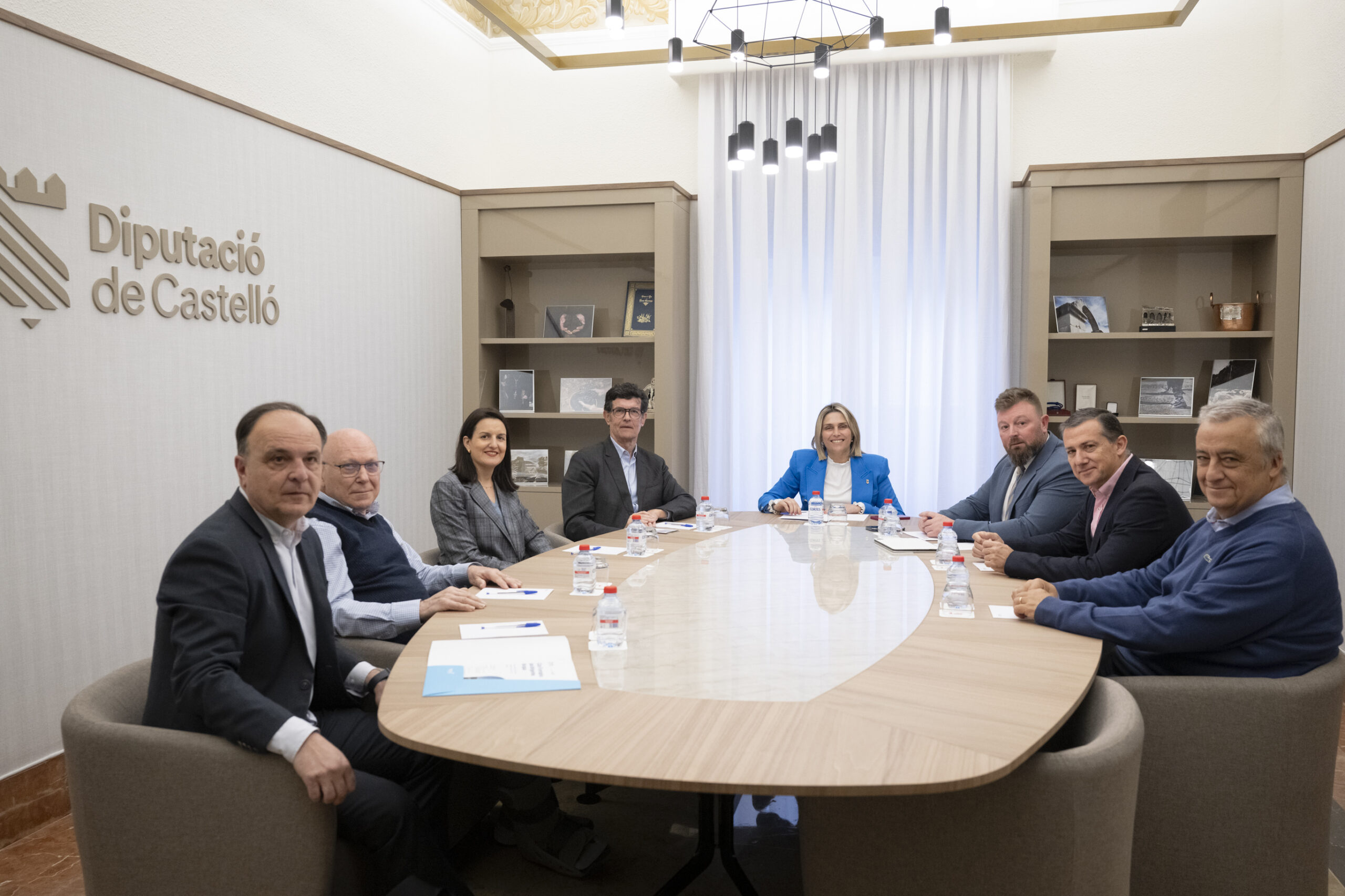
The Provincial Council of Castellón and FACSA join forces in their commitment to responsible water management with the 1st Training Cycle for water managers.
The president of the provincial institution, Marta Barrachina, met this Thursday with the president of FACSA, Enrique Gimeno; the councilor Elena Llopis and the general director, José Claramonte, to discuss the initiative that will be developed between May and September and in which the water situation, efficiency and the challenges of the future will be analyzed.
The meeting was also attended by the deputy for the Integrated Water Cycle, Iván Sánchez, and the professor of Fluid Mechanics at the Polytechnic University of Valencia (UPV) and urban water management professional, Enrique Cabrera, who will participate in this first cycle.
“Efficient and responsible water management is a crucial challenge for the province, hence the importance of involving professionals from the province's municipalities who are responsible for managing these systems,” the provincial leader emphasized. This opinion was shared by the president of Facsa, Enrique Gimeno, who added that “The first cycle we are launching aims to mark a turning point in water management for the municipalities of the province of Castellón.”
Water management in general, and municipal water management in particular, faces significant challenges in the coming decades. In this regard, the training program promoted by the Castellón Provincial Council and Facsa focuses on analyzing this new scenario and proposing solutions that should be adopted in the province to adapt to it. The program is structured over three days. The first day will analyze the water situation, both globally and locally in Castellón and its province, to identify what is being done well and what can be improved. "To this end, it is important to consider the strategies being adopted in countries that best manage urban water, so that we can adapt those best suited to Castellón and its province," explained Enrique Gimeno.
The second day will focus on efficiency, the cornerstone of sustainability, because without it, providing a quality, sustainable service at the lowest possible cost is impossible. The third and final day will address future challenges by reviewing, once again, the two scenarios—global and local—and then specifying the necessary changes to confidently face the significant challenges that the future will demand of these systems.
Finally, based on the analyses carried out and the debates held, conclusions will be drawn up and structured into a roadmap, outlining the path forward for more sustainable water management. All of this will take into account the current situation in the province of Castellón, which, as the President of the Provincial Council, Marta Barrachina, stated, “will have a significant milestone: the Provincial Water Consortium. We have already given initial approval to its statutes in plenary session, and with this, we are fulfilling our commitment to achieving cohesion, efficiency, and solidarity in the management of water resources throughout the province.” In addition to the impetus given to the new consortium, the province has important infrastructure such as desalination plants, as well as a promising project that will allow for the measurement and digitization of key hydraulic variables in municipalities with fewer than 20.000 inhabitants.
Taken together, the changes proposed throughout the analysis should contribute both to enhancing current strengths and overcoming existing weaknesses so that, as a whole, they allow us to confidently address the challenges of the future described above.
The training is aimed at professionals in the municipalities of the province of Castellón who are responsible for managing these systems. This includes decision-makers (mayors and councilors) as well as managers, technicians, and operators responsible for their management, operation, and maintenance. The content will be presented in a way that is accessible even to those without a technical background.
Regarding the documentation that will support this first cycle, the book “Guidelines for Sustainable Urban Water Management,” promoted and published by Facsa, will serve as the basis for the overall analyses. For the local aspects, Enrique Cabrera, Professor of Fluid Mechanics at the Polytechnic University of Valencia (UPV) and an expert in urban water management, will prepare the corresponding reports in collaboration with technicians from the Provincial Council, while Facsa technicians will summarize the success stories presented. Presentations prepared for each session of this first training cycle will supplement the information provided to participants.
Finally, the conclusions reached will be compiled in a final summary document that will be prepared at the end of the last training session and in which it is expected that both the speakers and the attendees will participate, to a greater or lesser extent, in the final drafting of the conclusions.
Related news


Need help?
We are here for whatever you need