


22 February 2021
The European LIFE AMIA project is making progress towards its goal of promoting the reuse of treated wastewater
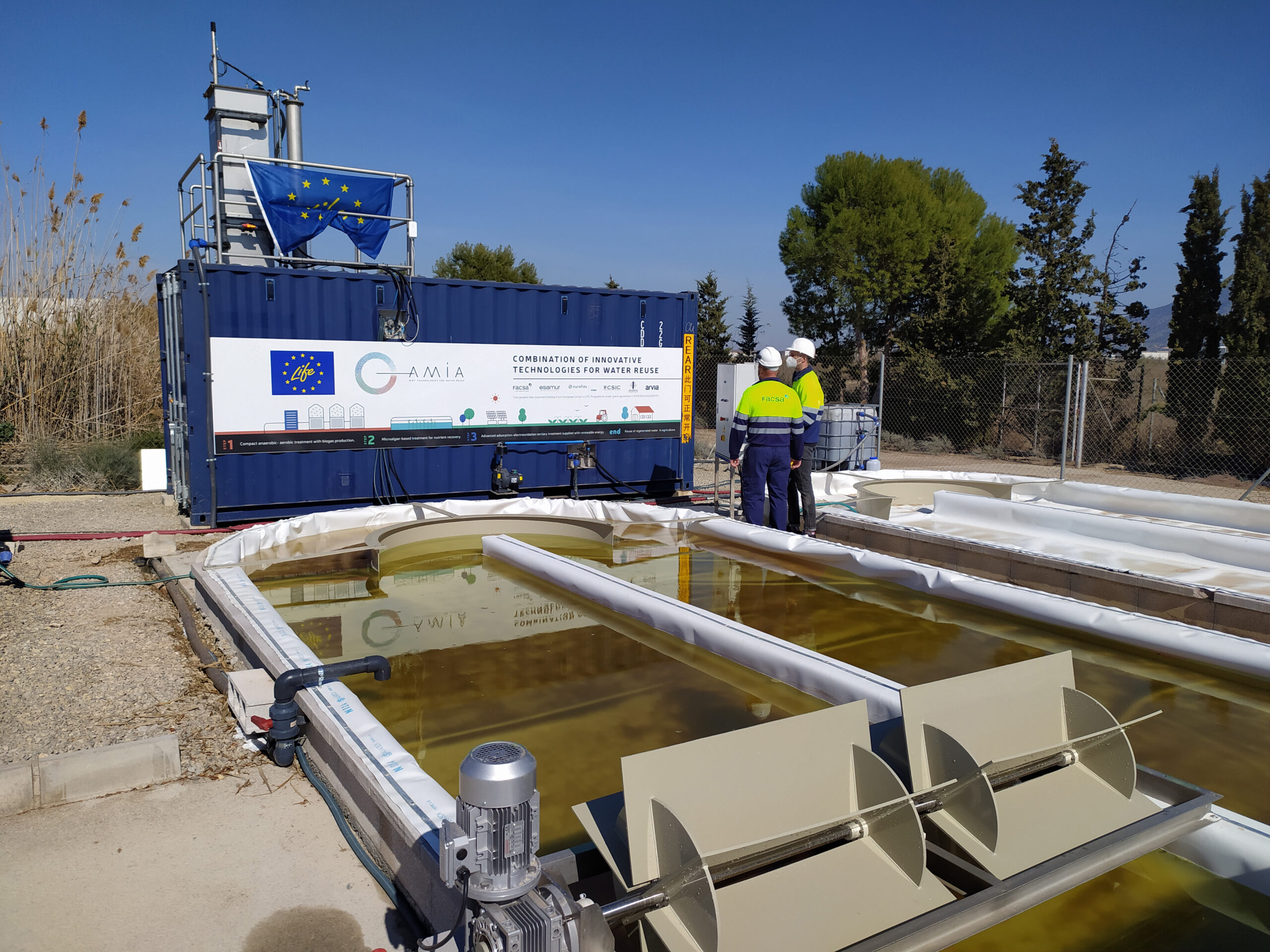
- The initiative, part of the European LIFE program, will allow water to be reused and nutrients to be recovered for agricultural use through a technology that consumes little energy and has low greenhouse gas emissions.
- The project, led by FACSA, includes six partners from three countries: ESAMUR, CEBAS-CSIC, Eurofins Iproma, the British company Arvia Technology and Atlantis Consulting Cyprus
Each year, over 40.000 billion cubic meters of wastewater are treated in Europe, of which only 2,4% is reused. To improve these figures, FACSA launched LIFE AMIA in 2019. This project aims to promote water reuse in European wastewater treatment plants using energy-efficient technology that minimizes greenhouse gas emissions.
After 16 months of work, FACSA - in collaboration with the Regional Entity for Sanitation and Wastewater Treatment (ESAMUR), the Segura Center for Soil Science and Applied Biology of the Spanish National Research Council (CEBAS-CSIC), the Eurofins Iproma laboratory, the British company Arvia Technology and the Cypriot consultancy Atlantis Consulting - has presented the first results to the NEEMO Life Team, responsible for monitoring the projects of the European LIFE program of which AMIA is a part.
Last December, the first stage of the treatment process was commissioned: a compact anaerobic-aerobic (A2C) process that combines granular anaerobic biomass with an aerobic process using supported biomass. In this context, one of the microalgae reactors receiving the effluent from the previous aerobic process was recently inoculated, and the tertiary treatment, based on an advanced oxidation process, is expected to be implemented during March at the Alhama de Murcia Wastewater Treatment Plant.
All of this will improve the final quality of the treated water and facilitate both its reuse in agriculture and the use of the sludge and microalgae resulting from the process as fertilizers. This is especially relevant considering that water stress currently affects 130 million EU inhabitants (30%) and that, according to forecasts, water demand will increase by 55% by 2050 compared to 2015 levels.
Related news


Need help?
We are here for whatever you need