


23 July 2021
The EMBER Project successfully comes to an end
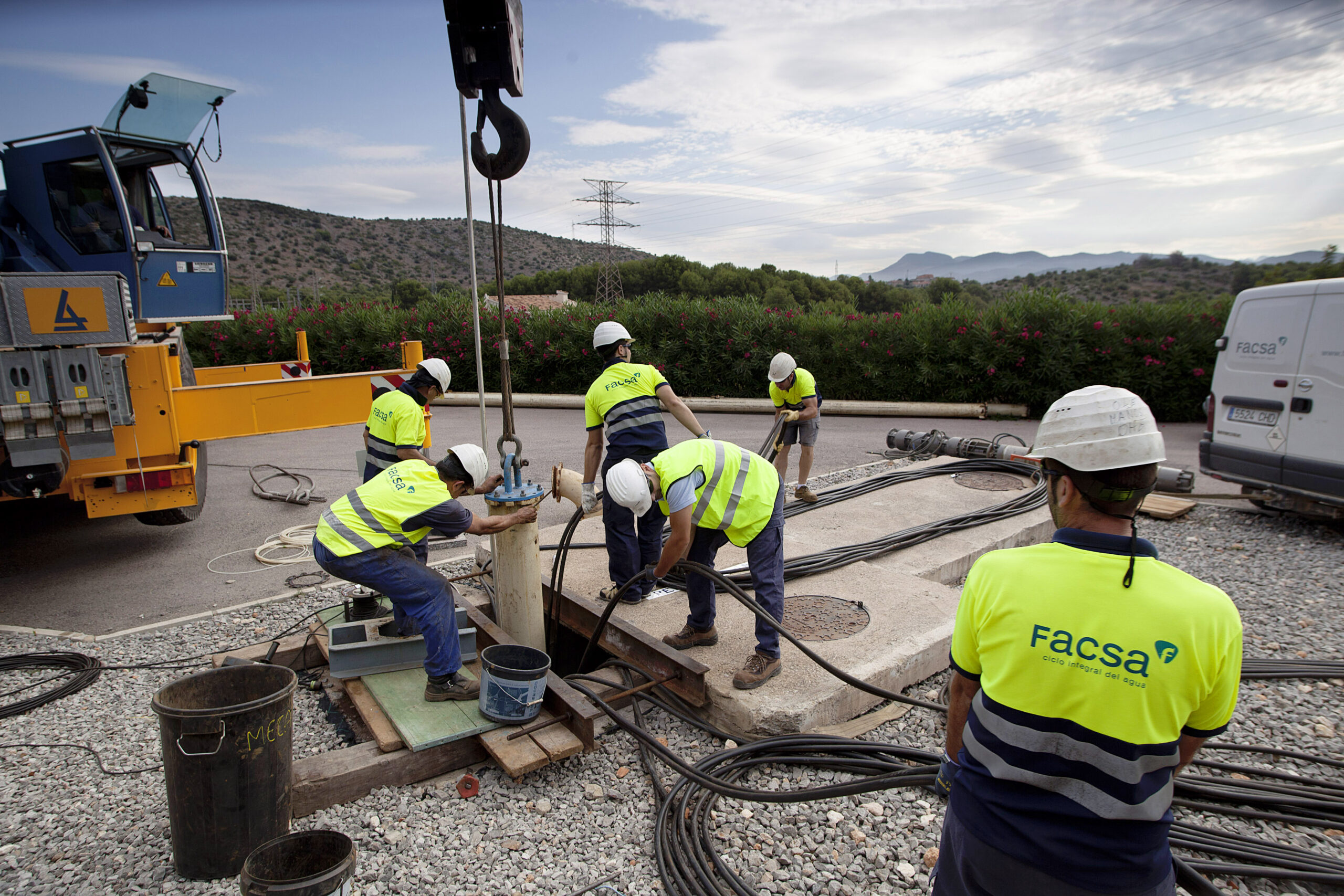
- The team, made up of FACSA and members of the Polytechnic University of Valencia and the University of Valladolid, manage to develop an innovative automatic monitoring system for the condition of thrust bearings in submerged pumps
The Ministry of Science, Innovation and Universities and the ERDF funds awarded funding for the EMBER project in the 2019 'Collaborative Challenges' call. This project has now concluded after achieving its objective: to develop a pioneering monitoring system capable of predicting failures in equipment such as submersible water pumps, in order to facilitate their replacement and prevent damage and potential breakdowns.
The project team – made up of FACSA and members from the Polytechnic University of Valencia and the University of Valladolid – has managed to define the electrical magnitudes derived from the voltages and currents that may correlate with the wear state of the thrust bearings in submersible pumps and detect bearing failures in an incipient state. The main advantage of this innovative method is its non-invasive nature, as it is carried out on the surface, without the need to install sensors in the submerged system.
Thrust or axial bearings are a crucial component in submersible pumping systems, especially in vertical-shaft pumps. Located at the bottom, they support the weight of all moving parts, including the working fluid. These bearings, consisting of a fixed element made up of a set of pads and a solid moving element, are subject to wear that must be monitored. Otherwise, this can lead to bearing failure, resulting in a major motor failure.
Specifically, wear can increase to the point of causing friction so high that it leads to an overload not anticipated by the motor's protective devices, or to the detachment of bearing fragments that, after circulating through the coolant, impact the motor's stator insulation. In both cases, the motor must be rewound, and the maintenance cost is significantly higher than simply replacing the worn bearing.
In surface pumps, wear is typically monitored using a proximity sensor between the fixed and moving parts of the bearing. In pumps that operate fully submerged in their working fluid, such as those used in drinking water or irrigation wells, proximity sensors cannot be used, and vibration measurement is also impractical. One solution currently employed by the industry is monitoring the motor's operating temperature, but this depends on other factors and lacks sufficient sensitivity regarding bearing condition.
Related news


Need help?
We are here for whatever you need