


19 May 2020
The Castellón City Council and FACSA are studying the presence of the SARS-CoV-2 coronavirus in wastewater to strengthen its early detection.
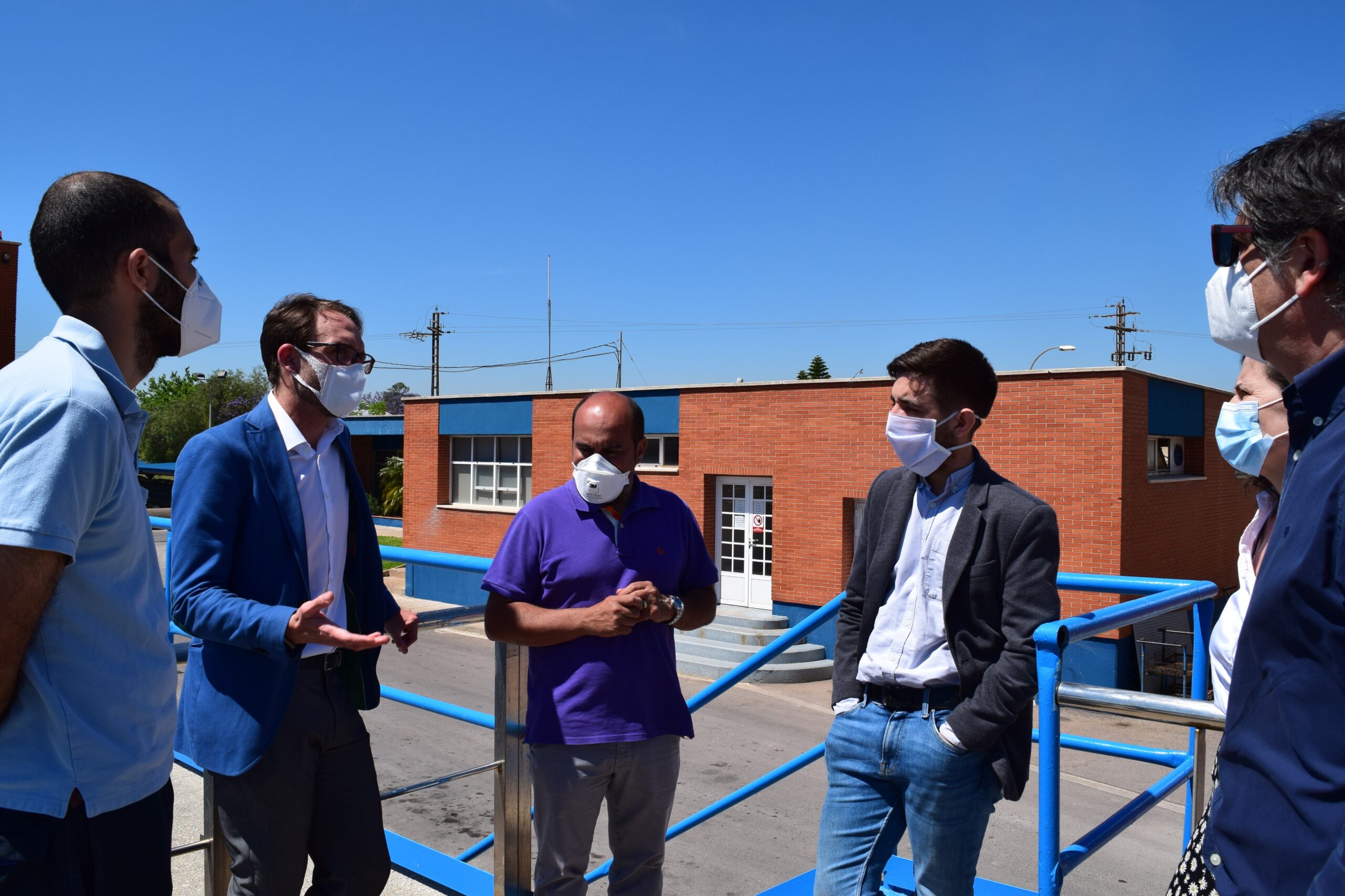
- “Covid Water” is in its third week of implementation and its main objective is to anticipate possible reinfections of the population
The Castellón City Council, through its Department of Ecological Transition, and in collaboration with FACSA, has launched “Covid Water.” This study is quantifying fragments of SARS-CoV-2 virus RNA, the virus that causes Covid-19, in the sewage system and wastewater treatment processes of Castelló de la Plana, in order to strengthen the early detection of possible outbreaks of the disease.
Thus, the main objective of the project is to quantify the presence of the virus in wastewater to obtain data that, along with other population and epidemiological information, will allow us to anticipate possible reinfections of the population with Covid-19, especially considering the current de-escalation process. Similarly, the study seeks to understand how the virus behaves in the wastewater and sludge line of the Castelló Wastewater Treatment Plant (WWTP), for which several points along the line are being studied to determine the evolution of its concentration.
In this context, the Councillor for Ecological Transition, Fernando Navarro, visited the Castelló Wastewater Treatment Plant this morning together with Luis Basiero, director of the sanitation and wastewater treatment area at FACSA, and Ernesto Santateresa, deputy director of environmental quality at the same company, in order to check the progress of the project. During the visit, Navarro highlighted ‘the importance of research in helping to prevent and contain possible resurgences of the pandemic’ and stressed that ‘knowing of the presence of the virus's own genetic material can provide information on where most infections occur in the city and help develop an early detection system’.
For their part, FACSA has indicated that the sanitation networks of industrial areas or those with a high population density will soon be analyzed, with the aim of adding greater precision to the study and management of Covid-19.
Related news


Need help?
We are here for whatever you need