


27 May 2020
Research, innovation and technology to predict COVID-19 outbreaks through wastewater
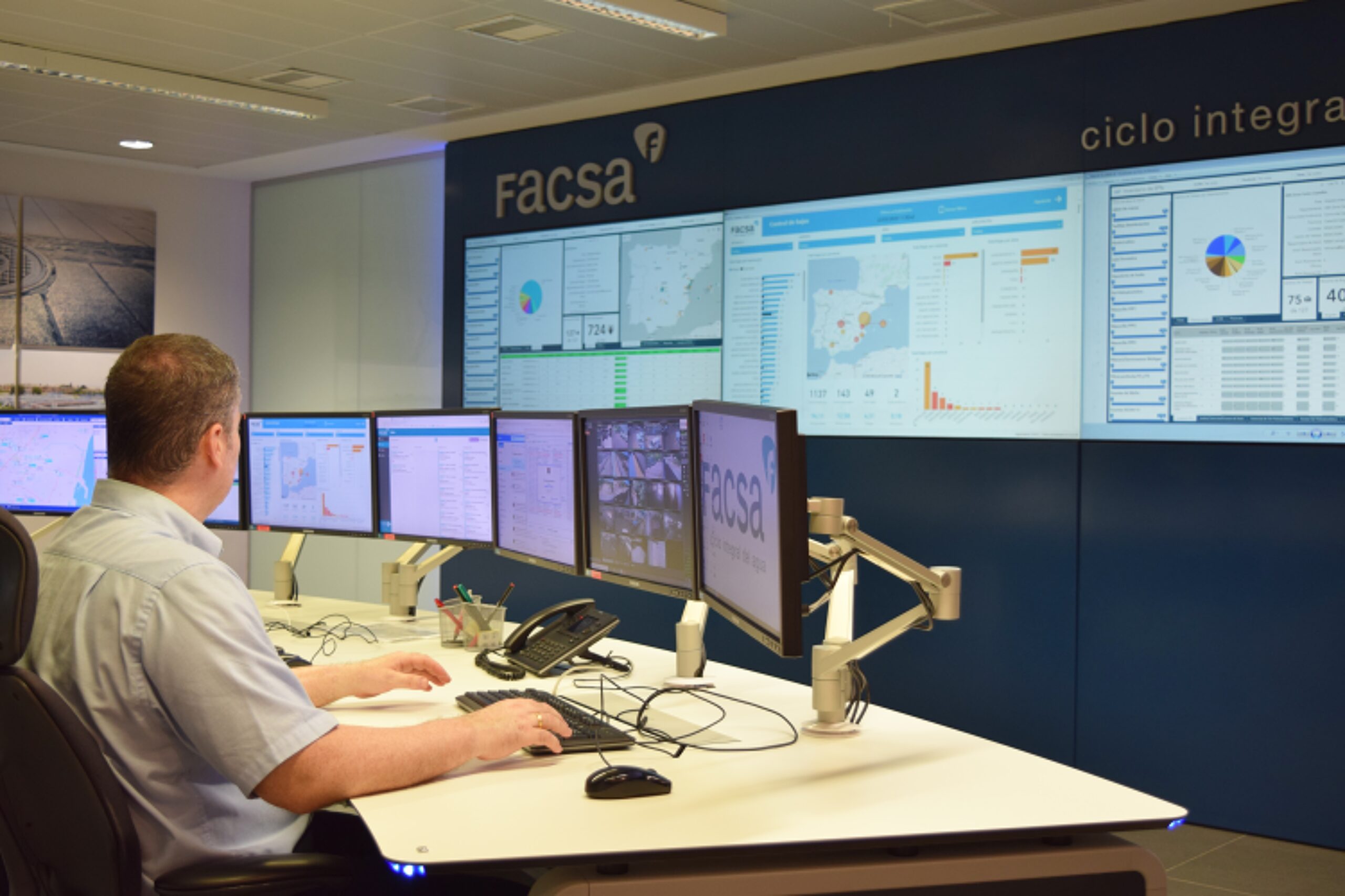
- FACSA leads COVID WATER, a comprehensive research project on SARS-CoV-2 that aims to detect and quantify the virus's genetic material in sewage and urban wastewater treatment plants (WWTPs).
- The initiative, which has 3 lines of research, is being carried out at the national level together with the CSIC, specialized institutes and universities.
- A digital tool based on Artificial Intelligence for the early detection of possible outbreaks is currently being developed.
Covid Water is the name FACSA, a leading company in integrated water cycle management, has given to its comprehensive research project on SARS-CoV-2 in sewage systems and wastewater treatment plants. This initiative aims to provide society with an innovative tool to combat the Covid-19 pandemic through the detection and quantification of the virus's genetic material in wastewater.
The main objective of this quantification is to obtain data that, together with other types of population and epidemiological information, will allow us to anticipate possible reinfections of the population by COVID-19, taking into account the de-escalation process in which we find ourselves.
To this end, the behavior of viral RNA fragments in the water and sludge lines of different types of Wastewater Treatment Plants (WWTPs) is analyzed in order to obtain information that allows a clear and concise picture of the behavior of this virus in urban sanitation.
The first study related to the Covid Water project is in its fifth week of sampling and is already underway at various locations across Spain, including Andalusia, Aragon, Catalonia, the Valencian Community, Asturias, and Murcia, where FACSA provides services. Sampling and analysis are being adapted to the specific circumstances of each community and its wastewater treatment plant, with the close collaboration of the relevant authorities, who are fully committed to this process.
Likewise, FACSA is collaborating with the University Institute of Pesticides in Water (IUPA) and the General Directorate of Water of the Valencian Community in a study of similar characteristics, which IUPA is leading in the province of Castelló, and which is also being developed in a large number of wastewater treatment plants in the provinces of València and Alicante.
Artificial intelligence for early detection
FACSA has started working on a project funded by the Ministry of Innovation, Universities, Science and Digital Society through the Valencian Innovation Agency, for which five wastewater treatment plants - and their corresponding sewers - in towns in Castelló, València and Alicante will be sampled, thus monitoring large cities, medium cities and small towns.
The main novelty of this project is based on the creation of an accessible digital tool that collects information on the detection of the SARS-CoV-2 coronavirus in different urban settlements, along with freely accessible population data, as well as other indicators of interest of a socio-economic and environmental nature.
In this way, alongside obtaining data on the presence of SARS-CoV-2 in the selected samples from the different locations, work will be done on collecting population and epidemiological data. The aim is to identify demographic and environmental variables that may be related to the presence of the virus in wastewater, as this can be a tool for indirectly understanding the impact of the epidemic on the population, regardless of whether or not symptoms are present.
The project will last six months and will have the collaboration of IATA-CSIC, CEBAS-CSIC, the University Institute of Pesticides in Water-IUPA of the Universitat Jaume I, the Technological Institute of Informatics (ITI) and the technology company IoTsens.
Jose Claramonte, CEO of FACSA, emphasizes that “The company aims to combine analytical results obtained from different points in the network with aggregated population and epidemiological data and, using artificial intelligence technologies, identify trends and patterns of behavior for each sanitation system or area analyzed. This tool could be of great help in modulating the phases of the de-escalation process we are currently experiencing, as well as in monitoring the pandemic and detecting potential outbreaks early.”
With all this, FACSA joins forces in the fight against the current health crisis, contributing its knowledge and extensive experience in this field, where it has already developed projects on monitoring pollution through the sewer network or epidemiological campaigns in geographic information systems for the spatial management of data.
Related news


Need help?
We are here for whatever you need