


19 May 2022
Representatives from the Provincial Council and the City Council of Castelló visit the Facsa Training School
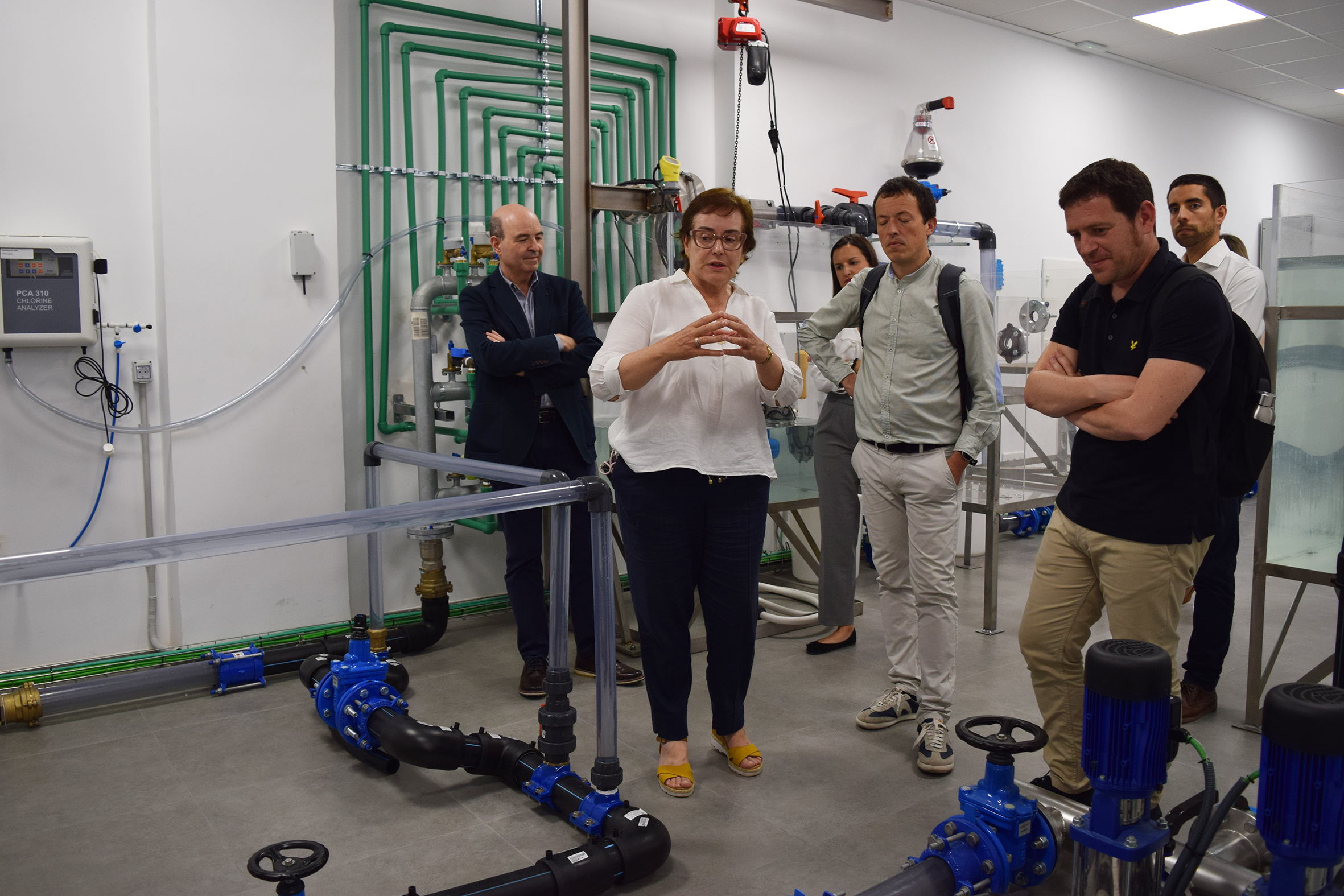
Ignasi Garcia, Provincial Deputy for Sustainability of the Castelló Provincial Council, visited the FACSA. The aim of the meeting was to see first-hand the facilities where the Higher Vocational Degree in Water Management and the Intermediate Vocational Degree for Water Treatment Networks and Plants Technicians are taught. Specifically, the workshops and the more practical part of these qualifications take place at the FACSA Training School.
García have shown particular interest in the technological innovations that these qualifications incorporate since, as Laura Gabín, head of the Training and Development department, commented, “technology is and will be the basis for developing solutions that respond to the main challenges and opportunities facing the water sector”.
For his part, the deputy highlighted that “the Integrated Water Cycle requires skilled professionals to face the challenges that climate change poses to institutions such as the Castellón Provincial Council when it comes to ensuring the supply and sanitisation of water to municipalities and to economic sectors such as agriculture and industry”. In this regard, García recalled that the Provincial Council will invest more than three million euros in the Water Master Plan, “which shows that these dual vocational training programmes offer a career path that will be in high demand over the coming years in our regions”.
Along the same lines, Francesc Mezquita, Councillor for Education at Castelló City Council, spoke, who was also present at the visit together with Ignacio Sangüesa, head of the Provincial Council's Technical Area. On behalf of the company, Elena Llopis, Director of Organisation and Process Improvement at Gimeno Group, Pascual Maximino, director of the Supply Area, and Vicente Lluesma, director of the Financial Area, attended.
Workshop school of FACSA
The workshop school has everything needed to ensure that students learn all the processes involved in assembling and maintaining drinking water distribution and sanitation networks, as well as the installation, operation and upkeep of all the operating, control and measuring equipment and other elements that accompany water from its source to its return to the environment.
In addition, to emphasise the teaching nature of the centre, the workshop has a full-scale circuit with transparent tanks and pipes that represents the different processes involved: the abstraction, purification, distribution and sanitation of water.
Related news


Need help?
We are here for whatever you need