


29 March 2021
The PIVER team has developed an innovative system to reduce the impact of industrial discharges into rivers
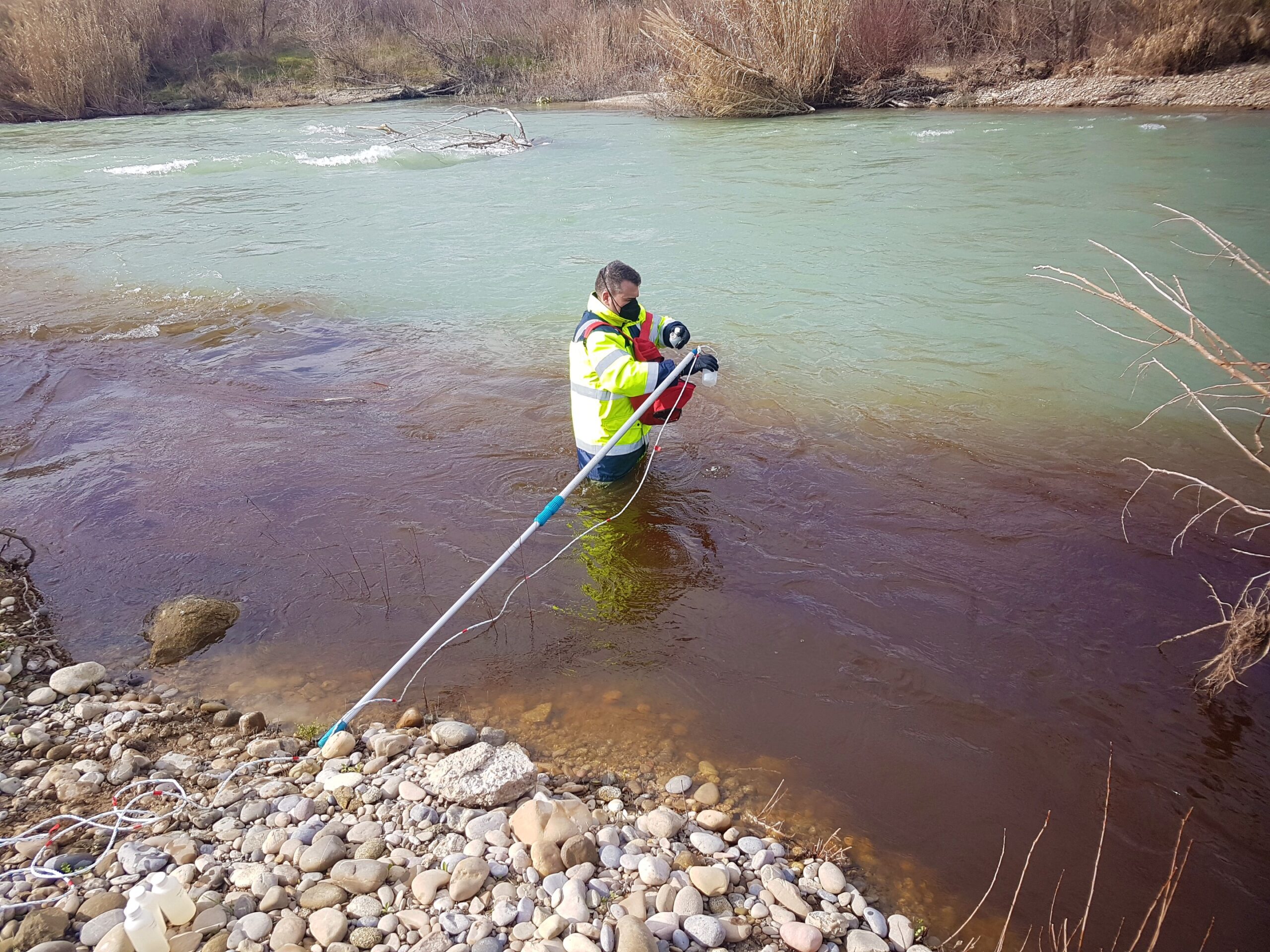
- The initiative, led by FACSA, has been carried out in collaboration with Ideya, Control 7 and Zinnae and has been subsidized by the Ministry of Industry within the latest call for aid to Business Groups or clusters.
- Its development involved the use of a novel computational fluid simulation tool, drones with thermographic and analytical cameras in the river
Predicting, controlling, and reducing the impact of industrial discharges on rivers is now possible thanks to PIVER. This project, driven by FACSA and subsidized by the Ministry of Industry through its grants for Innovative Business Clusters, aims to reduce environmental risk and the economic costs associated with damage to the physical environment and ecosystems.
The initiative—developed in collaboration with the Aragonese water cluster (Zinnae), the environmental consulting and engineering firm Ideya, and the quality control and assurance laboratory Control7—has made it possible to obtain experimentally validated computational models to accurately predict the extent and impact of the spill based on the pollutants it contains and the river's low-water conditions. This has been invaluable in establishing alternative solutions for introducing the spill into the river, achieving rapid dispersion that minimizes the impact on its waters.
For the successful development of the project, Ideya monitored temperature changes using aerial thermography obtained with drones, and Control7 carried out numerous analyses and samplings of river water near the discharge points. Both the drone flights and the sampling were conducted in two campaigns, in November 2020 and February 2021, to account for different low-water conditions in the rivers.
For its part, the data and information derived from these campaigns have been analyzed by FACSA to validate the mathematical models subsequently implemented in the two-dimensional hydraulic calculation software and computational fluid dynamics (CFD).
It is expected that the new working methodologies and computational models developed will serve as a basis for future projects in which this technology can be combined with that of Industry 4.0, so that a large data network is available where the behavior of a large number of spills is known precisely in order to help mitigate their possible effects on the environment on a large scale.
Related news


Need help?
We are here for whatever you need