


2 June 2025
Facsa triples its water infrastructure portfolio in the last year
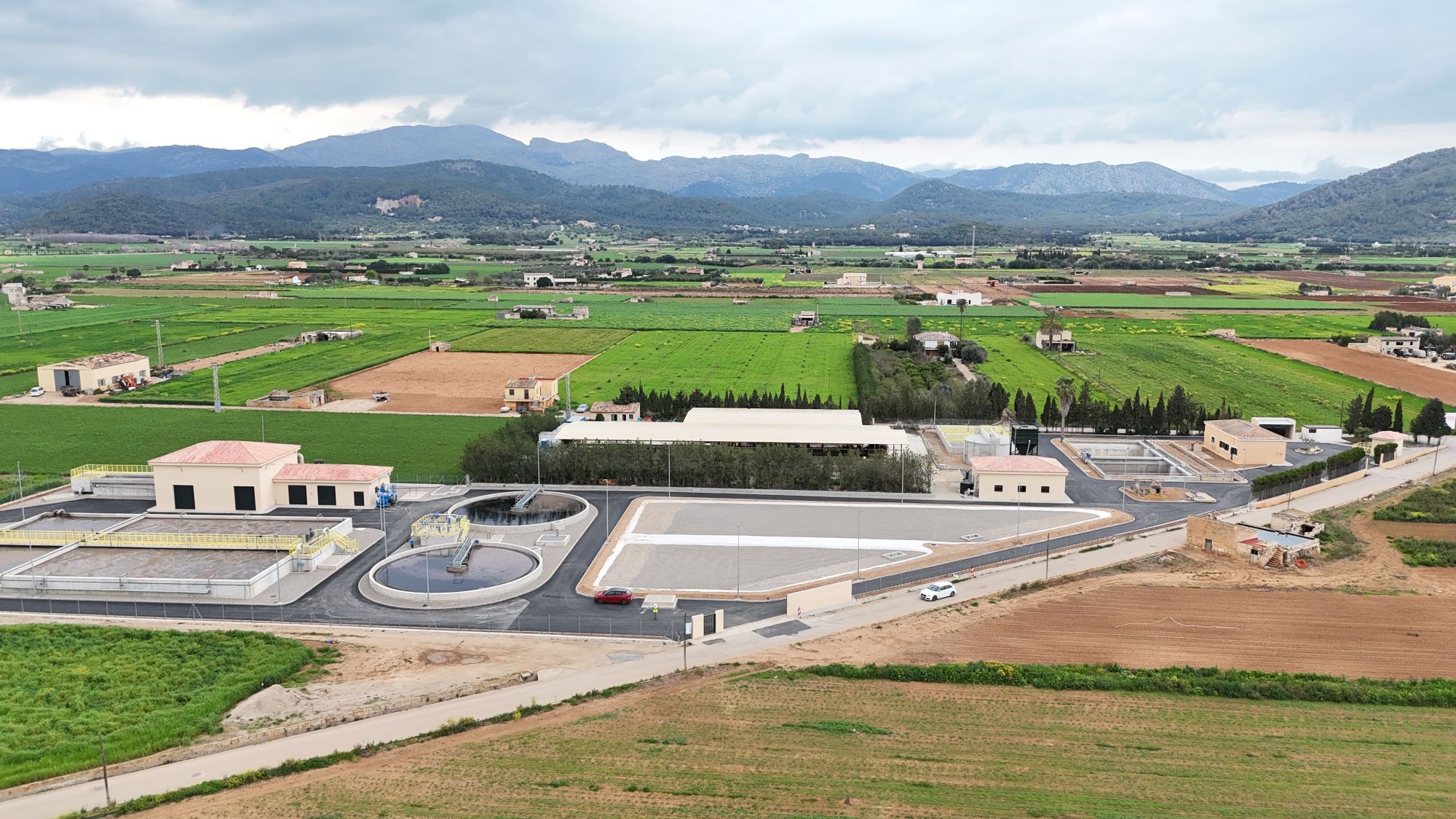
FACSA, the parent company of Grupo Gimeno, has increased its focus on the Infrastructure sector, experiencing exponential growth in recent years that has taken its revenue from €11,7 million in 2024 to a projected €30,5 million by the end of 2025. This growth not only reflects Facsa's ability to adapt to current challenges in water management in Spain, but also positions this leading company in integrated water cycle management, waste valorization, and bioenergy as one of the most advanced in infrastructure construction.
In a context where investment in network renewal is well below the recommended 2% (only 0,49% of the distribution network and 0,33% of the sanitation network are renewed, according to data from DAQUAS, the Spanish Urban Water Association), Facsa is playing a key role in highlighting the urgent need to invest in water infrastructure. Through this work, the company seeks to position itself as an active part of the solution to the challenges posed by water stress, increased demand, climate change, and water pollution. Overcoming these challenges requires a renewed and sustained focus on the modernization and development of infrastructure.
« Water management in Spain can no longer be treated as if it were an unlimited resource. We face a reality marked by more intense and frequent droughts, obsolete networks and clearly insufficient investment in hydraulic infrastructure, which in many cases is more than 40 years old. At Facsa we are working to lead the change towards more sustainable and resilient water management, a strategic resource for social wellbeing and the country's development’, said Jose Claramonte, CEO of Facsa.
Evolution and key projects
Over the past three years, the Infrastructure area has grown significantly, developing projects for wastewater treatment and purification, modernization of the water supply, efficiency in the use of industrial water, the use of non-conventional resources, as well as the production of bioenergy and efficiency in the use of water in agriculture.
Among the projects, the improvement and expansion of the Maqua wastewater treatment plant in Asturias stands out, with a budget of nearly 50 million euros. The project for this plant, conceived under the principles of the circular economy, aims to significantly improve its capacity and efficiency in the treatment of wastewater and rainwater, with actions that will directly impact the protection of the environment and the quality of service to citizens.
Also in Asturias, the modernization work at the Villapérez wastewater treatment plant stands out, with a budget of over €10 million. Thanks to the improved regeneration process, it will be possible to reduce discharges into the natural environment and promote more efficient water management, making better use of available resources and decreasing the need to extract drinking water from rivers and aquifers.
Furthermore, the continuous growth of irrigated land, droughts, and climate change pose challenges to the sustainability of the water system. In this regard, Facsa is carrying out various irrigation infrastructure projects that promote the improvement and modernization of facilities, such as the one underway at the Torre del Águila Reservoir Irrigation Community in El Palmar de Troya and Utrera (Seville), and the construction of a photovoltaic generator and a regulating reservoir for pumping water from the Left Bank Canal of the Najerilla River (La Rioja).
These investments aim to ensure a quality water supply for agriculture, which accounts for 80% of water consumption in the country, as well as comply with new European directives.
As FACSA continues to expand its Infrastructure division, the company is innovating and adapting to the challenges of climate change and water management. With more than a dozen contracts lined up for 2025 and a focus on modernizing existing infrastructure, Facsa has begun to play a crucial role in the evolution of the water sector in Spain, and more specifically, in the infrastructure sector.
“We are committed to initiatives that integrate innovation, sustainability, and technology as fundamental pillars. We want to continue advancing proposals that respond to the real needs of the water sector, especially in a context where efficiency in water resource management is more important than ever,” Claramonte emphasized.
Related news


Need help?
We are here for whatever you need