


26 November 2020
FACSA, together with the Castelló City Council, is analyzing the sustainability challenges facing the city.
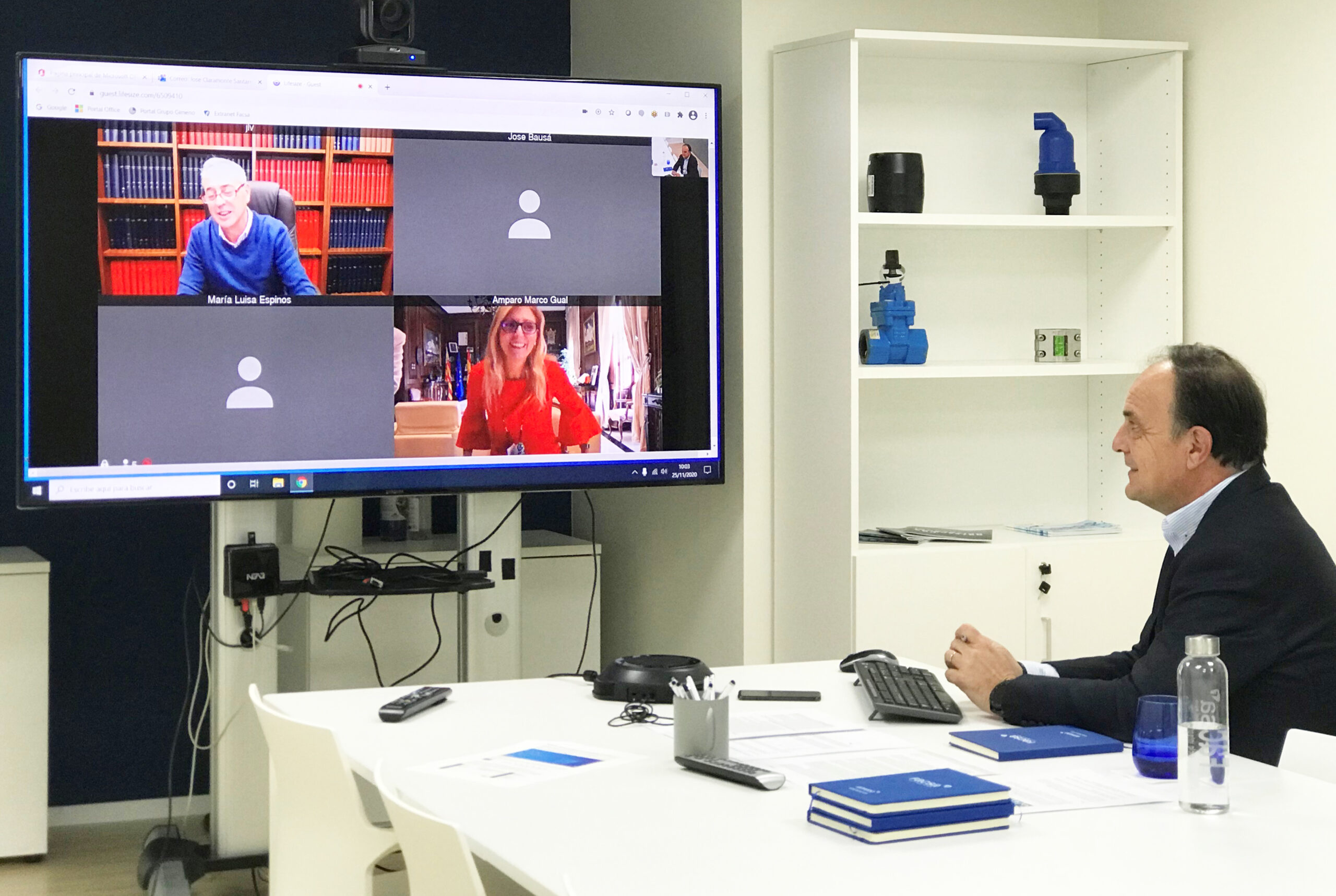
“Castelló has done its homework in terms of sustainability, but there are still many challenges to face.” This was the assertion of José Claramonte, CEO of FACSA, during a meeting yesterday with Amparo Marco, Mayor of Castelló, regarding UN Sustainable Development Goal number 11, which aims to make cities more inclusive, safe, and sustainable.
During the meeting, organized by Mediterráneo and moderated by its director, José Luis Valencia, both agreed that Castelló seeks to "humanize" itself through the challenge of sustainability, without sacrificing economic growth. This aspiration to become a green city will be closer to reality once the 2021 general plan is implemented.
In this context, the mayor highlighted the “legal certainty” that the new plan will provide to companies wishing to establish themselves in Castelló, citing Amazon's decision to locate in Onda as an example. Along these lines, Claramonte commented that this plan will be “a fundamental element for the sustainable development of Castelló,” and pointed to aspects such as the regulation of the Marjaleria wetlands, the creation of greenbelts, and the improvement of urban drainage to prevent flooding.
Following on from the above, Claramonte highlighted that "the city has water of sufficient quality and quantity to meet all the challenges it faces," and emphasized "the milestones focused on sustainability and growth," such as the wastewater treatment plant, an example of a circular economy, or the distribution network for irrigating parks and gardens, which uses sludge to fertilize fields and is able to be self-sufficient in energy with the biogas it generates.
The CEO of FACSA also highlighted the large investment made in the city, which has allowed "multiplying the capacity for rainwater drainage" within the framework of the challenge of managing increasingly shorter but more severe rainfall.
Finally, he highlighted the wastewater monitoring capacity, “a reflection of society’s behavior,” which has enabled the implementation of the Covid Water project, “a tool to monitor this pandemic and, in the future, for whatever may come.”
However, Claramonte pointed out that "there are still challenges to overcome in the integrated water cycle," which involve, in part, "the implementation of technology and digital transformation that must be accompanied by citizens' access to tools to avoid digital divides."
Finally, when asked about the Castellón they would like to see in the future, Claramonte emphasized that the capital of La Plana “is a privileged location to become a leading city.” The CEO of FACSA added that he would like to see “a commitment to integrated innovation within a friendly urban environment, with metropolitan transport, green spaces, and care for the agricultural heritage, which is a defining characteristic, and the challenge of the Marjaleria,” which he would like to see become “a well-managed wetland for everyone to enjoy.”
Castelló, therefore, takes on the challenge of growing with a sustainable city model, and for this purpose it has also been chosen as a pioneering city to configure a strategic plan that determines, as Marco explained, "what kind of city we want to be."
Related news


Need help?
We are here for whatever you need