


10 September 2024
Facsa promotes the production of biofuels and sustainable energy through two new European projects
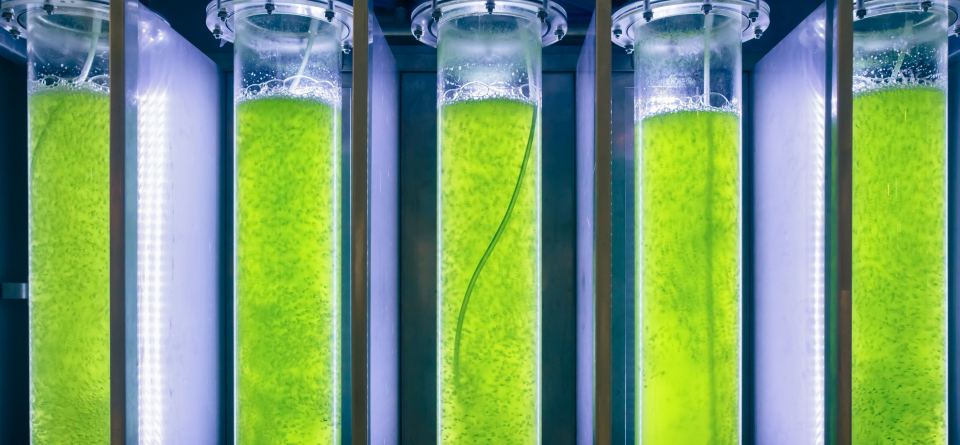
The search for sustainable solutions for energy production and the reduction of CO2 emissions continues to be a priority for the European Union. In this context, FACSA is taking part in two ambitious European projects: NIAGARA and FUELS-C, which seek to revolutionise the production of biofuels from biogenic waste and other sustainable sources.
These projects respond, on the one hand, to the company's circular economy roadmap and, on the other, to its commitment to bioenergy as a vector for adapting to climate change. A commitment that has gained strength following the creation of a new business area in 2023.
NIAGARA: Innovation in the production of biofuels and electrical energy
The NIAGARA project focuses on developing a new combination of novel, cost-effective and energy-efficient technologies for the production of biofuels and renewable energy from biogenic waste. This project seeks to address dependence on fossil fuels and the associated CO2 emissions, by making use of organic waste and microalgae crops to generate energy. Facsa will lead the identification and characterisation of the potential waste that could serve as raw material for this new process and the exploration of business lines to ensure its arrival on the market.
NIAGARA will implement a chain of sustainable processes that will include technologies such as hydrothermal carbonisation (HTC), gasification and aqueous phase reforming (APR). These technologies will allow the production of advanced hydrogen-rich fuels, which can be converted into electricity using solid oxide fuel cells. The project aims to achieve a very low carbon balance, with the potential to become negative in the long term.
In this project, in addition to Facsa, the CEA (Commissariat à l’Énergie Atomique et aux Énergies Alternatives) is taking part as project coordinator, together with Politecnico di Torino, Universidad de Almería, GazoTech, RISE Research Institutes of Sweden AB, Lomartov S.L, Lulea Tekniska Universitet, SOLYDERA SPA and École Polytechnique Fédérale de Lausanne.
FUELS-C: Diversification and efficiency in biofuel production
FUELS-C aims to develop an integrated platform that allows the production of different advanced liquid and gaseous biofuels in a single industrial facility. By taking advantage of innovative technologies and biogenic waste, FUELS-C seeks to maximise the energy efficiency and profitability of the facilities.
This project will contribute to the EU's climate neutrality, decarbonising the transport sector and reducing dependence on fossil fuels. FUELS-C will develop technologies such as bioelectrochemically assisted production of CH4 bioelectrochemical production of NH3, gasification, microbial electrosynthesis and electroreduction. The biofuels produced will be tested in fuel cells for electricity production, validating their power density, energy efficiency and stability.
In addition, FUELS-C will generate a digital twin of integrated processes and a raw material mapping tool, providing relevant data for assessing circularity, calculating costs and replicating in other contexts. The project expects to create new business opportunities and strengthen the EU's leadership in the biofuels market.
The project is led by LEITAT and, in addition to FACSA, the partners include UdG, UBU, CEA, Magellan Circle, ISLE, CNR, Bluenergy Revolution, and Fincoenergies.
Interdisciplinary consortium and strategic support
Both projects bring together leading research centers, universities, major industries, and SMEs from the EU. They will also be supported by an international Advisory Board that will provide strategic advice, ensuring the success and market acceptance of the proposed solutions.
With the launch of NIAGARA and FUELS-C, the EU is taking a significant step towards a more sustainable energy future that is less dependent on fossil fuels.
Both projects are funded by the HORIZON-CL5-2023-D3-02 call of the European Union's Horizon Europe programme.
Related news


Need help?
We are here for whatever you need