


19 April 2024
Facsa presents at the IWA Water Loss international congress how its technology helps reduce the level of water loss
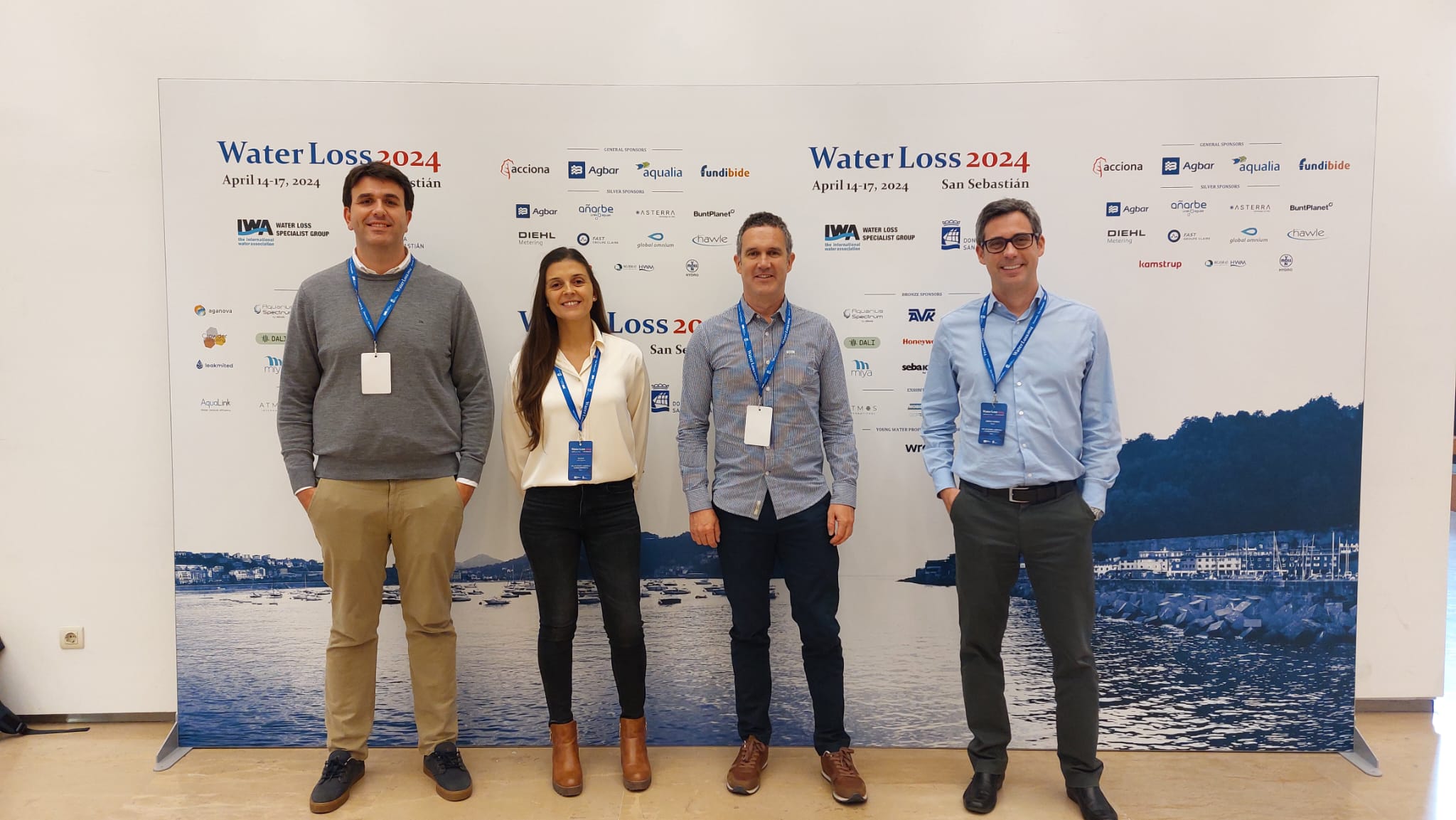
FACSA played a significant role at the prestigious IWA Water Loss 2024 international congress, thanks to the company's Metrology and Leak Detection departments. During this convention, experts from around the world met in San Sebastián to discuss various topics related to water loss management, including the latest developments and best practices.
In this context, Francesc Gavara, head of the company's Metrology department, gave the presentation 'The water meter, key for non-revenue water?', in which he highlighted the need for continuous control and supervision of the stock of meters, both those intended for recording domestic consumption and those intended for controlling water injected into distribution networks and hydraulic sectors.
“If there is one thing that truly sets FACSA apart from other companies managing the integrated water cycle, it is our firm commitment to the efficient and comprehensive management of water meters, as a fundamental pillar in reducing water losses and ultimately mitigating the energy impact of our services. This commitment has materialized over the last 20 years, making Facsa a benchmark in the sector. This commitment has recently been strengthened with ENAC accreditation and the addition of a new laboratory for testing large-diameter water meters,” explained Gavara.
Agustina Bazán, a technician in Facsa's Metrology Department, also gave a presentation highlighting the importance of remote sensing for optimizing supply management. Specifically, her presentation focused on the tools used in the phases prior to utilizing remote meter reading data, primarily related to optimizing the quality of consumption data, which is then used to generate valuable information for service management.
“This approach follows the guidelines of the UNE-ISO 25.012/2023 standard. We design and apply data quality models, providing greater reliability to the results we obtain from their subsequent processing,” Bazán highlighted.
On the other hand, Carlos Marco, head of the Leak Detection and Calibration departments at Facsa, gave a presentation explaining how leak detection can be improved using digital twins. In his presentation, titled "Improving leak detection by using digital twin (ArcGIS)," Marco highlighted the added value of using the leak and inspection tool developed within the GIS environment. He emphasized the versatility it offers by leveraging the geospatial component of data related to active leak control in water networks. He also outlined the main benefits observed after initial experiences with the tool.
During the congress the company also took the opportunity to present the results obtained in research work carried out together with the ITA of the UPV (Universitat Politècnica de València). Specifically, the following presentations were given: ‘Study on the metrology of domestic solid-state meters under real operating conditions’, and ‘NRRL: Practical aspects and possibilities. Case study’, delivered by Francisco Arregui and Ricardo Cobacho respectively, both professors at the UPV.
The congress has been organized once again by the IWA Water Loss Specialist Group. This group was created in 1997 with the aim of standardizing the indicators and terminology for managing public water services, reaching an international consensus on the development of water balances, and recommending best practices and methodologies to improve water loss management.
Related news


Need help?
We are here for whatever you need