


29 March 2023
Facsa works on the production of pesticides and biological stimulants from water waste for sustainable agriculture
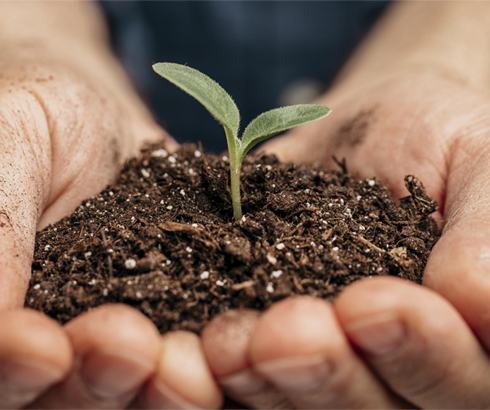
The use of renewable energies is vital to addressing critical global challenges such as climate change and global warming, within a context of energy scarcity and rising fossil fuel prices. One such renewable energy source is biogas, a gas produced from the biodegradation of a wide variety of organic waste, including sewage sludge, the organic fraction of municipal waste, and manure, among others. Biogas production through anaerobic digestion has experienced exponential growth in Europe in recent years, as it can be produced locally, allows for the treatment of organic waste, generates clean energy, and promotes sustainable development and climate action.
In this context, the FertiLab project (PLEC2022-009252), of which FACSA is a part, is being developed. It is funded by the European Union's Next Generation funds, within the framework of the Spanish Government's Recovery, Transformation and Resilience Plan (Ministry of Science and Innovation). The main objective of this initiative is to give a second life to the byproduct resulting from one of the phases of water treatment, known as digestate, by converting it into three types of products of great interest to sustainable agriculture.
Products that support sustainable agriculture
During the three years that the project will last (December 2022 – November 2025), FertiLab will seek to convert the sludge resulting from wastewater into three types of products of great interest for sustainable agriculture. Firstly, into fertilisers or mineral fertilisers enriched with nutrients present in this sludge. Secondly, into biopesticides, by means of solid-state fermentation of the sludge. And finally, into biostimulants, also by means of solid-state fermentation of the sludge. The advantages of these products include better plant growth, higher yields and improved crop quality, among others.
With all this, the project aims to achieve an improvement in the sustainability of agriculture at the territorial level based on the principles of agroecology, since it proposes to change the current scenario of intensive agriculture for more local strategies, in which nutrient cycles are closed and organic amendments are used in place of chemical products with a high environmental impact, such as mineral fertilizers and chemical pesticides.
Furthermore, Fertilab includes the evaluation of the potential use and application of the bioproducts obtained, promoting the commercialization and market acceptance of new bio-based agricultural ingredients. In addition, the “Living Lab” concept will be implemented to address sustainable fertilization with the participation of various stakeholders. This will act as a catalyst for the implementation of an open platform where new agricultural proposals can be addressed from technical, environmental, and economic perspectives.
Consortium and budget
The project consortium, of which FACSA, three universities, two research centres and an industrial partner are taking part: the Universitat Autònoma de Barcelona (UAB), with the composting group (GICOM) leading the project, the Universitat Politècnica de Catalunya – BarcelonaTech (UPC), the Miguel Hernández University (UMH) of Elche, the Institute of Agrifood Research and Technology (IRTA), and the Basque Centre for Climate Change (BC3) – Klima Aldaketa Ikergai. The fundable budget of the project is €643,662.
Related news


Need help?
We are here for whatever you need