


19 December 2025
Facsa calls for investment and stable funding to guarantee water security at the 4th Valencian Economic Forum
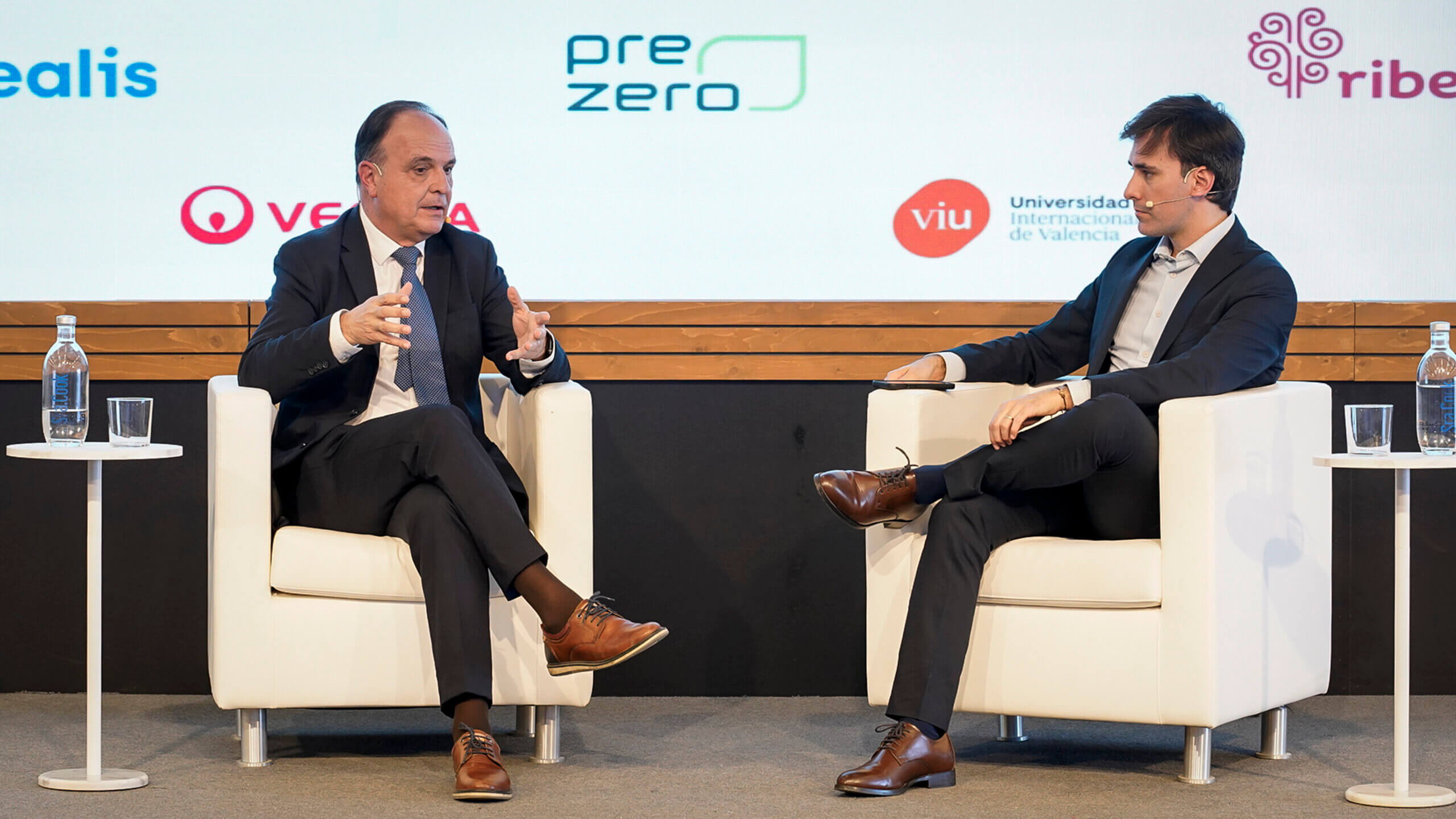
The water crisis threatens to become one of the major constraints on the economic and social development of the peninsula in the medium term. According to expert voices, this scenario can still be mitigated if action is taken now, but it requires solid planning by the authorities and stable funding that guarantees water security.
Taking part with this message was FACSA delivered this message at the 4th Economic Forum of the Valencian Community, organized by EL ESPAÑOL in collaboration with Invertia and Disruptores. The company's CEO, Jose Claramonte, warned that "we need investment and stable financing to achieve water security," emphasizing that inaction today will have a much greater economic and social cost in the future.
During her presentation, Claramonte focused on the results of the second study on the impact of extreme weather events, prepared by Facsa. This report confirms the increase in extreme weather events as one of the main challenges of the century for water management. The document's objective, she explained, is "to reflect the economically quantified impacts of extreme events" and to help keep water "alive in public discourse," since, although it is considered an essential resource, "it is rarely discussed" in public debate.
The report provides data that reinforces the urgency of action. According to the study, if no measures are taken, Spain could lose around 8% of its GDP by 2050 as a consequence of the water crisis. “Doing nothing doesn't save us money; on the contrary,” stated the CEO of FACSA, who emphasized the need to analyze the economic impact and make timely decisions.
From his perspective, planning is key at all levels of government. “Planning is needed in the autonomous communities, in the ministries, and in local administrations; it’s fundamental,” he stated. Water, he added, is a cross-cutting factor in any economic activity: “It can never be lacking. In addition to the economic impact, there are social tensions when there is scarcity.”
Claramonte also lamented that investments in water infrastructure, especially medium- and long-term projects, are often relegated in public budgets. “They focus on the short term,” she pointed out, while appealing for greater awareness and education, particularly in the political sphere. “Society already understands that investment is necessary for security,” she reminded everyone.
In this context, Jose Claramonte defended the need to explore different financing models that would allow for the development of the necessary infrastructure, including private sector participation. “There are needs, and if we want water security, we have to invest,” he stated, warning that the Valencian Community will have “much less water for the welfare state” if action is not taken proactively.
Climate change was another key theme of her speech. “Spain is in the spotlight, but the Mediterranean region is the most affected,” she noted, emphasizing that water should be a strategic priority in the policies of any territory. “We have plans, but we struggle to implement them. To make implementation easier, we need stable funding in the medium and long term,” she concluded.
The 4th Valencian Community Economic Forum is a highly significant event promoted by EL ESPAÑOL, Invertia, and Disruptores. The forum was chaired by the newspaper's executive chairman, Pedro J. Ramírez, and featured the participation of the new president of the Valencian Government, Juan Francisco Pérez Llorca, among other institutional and business representatives.
Related news


Need help?
We are here for whatever you need