


7 April 2021
FACSA is making progress in the production of biogas, bioplastics and biofertilizers from wastewater treatment plant sludge thanks to its Bioedaria project
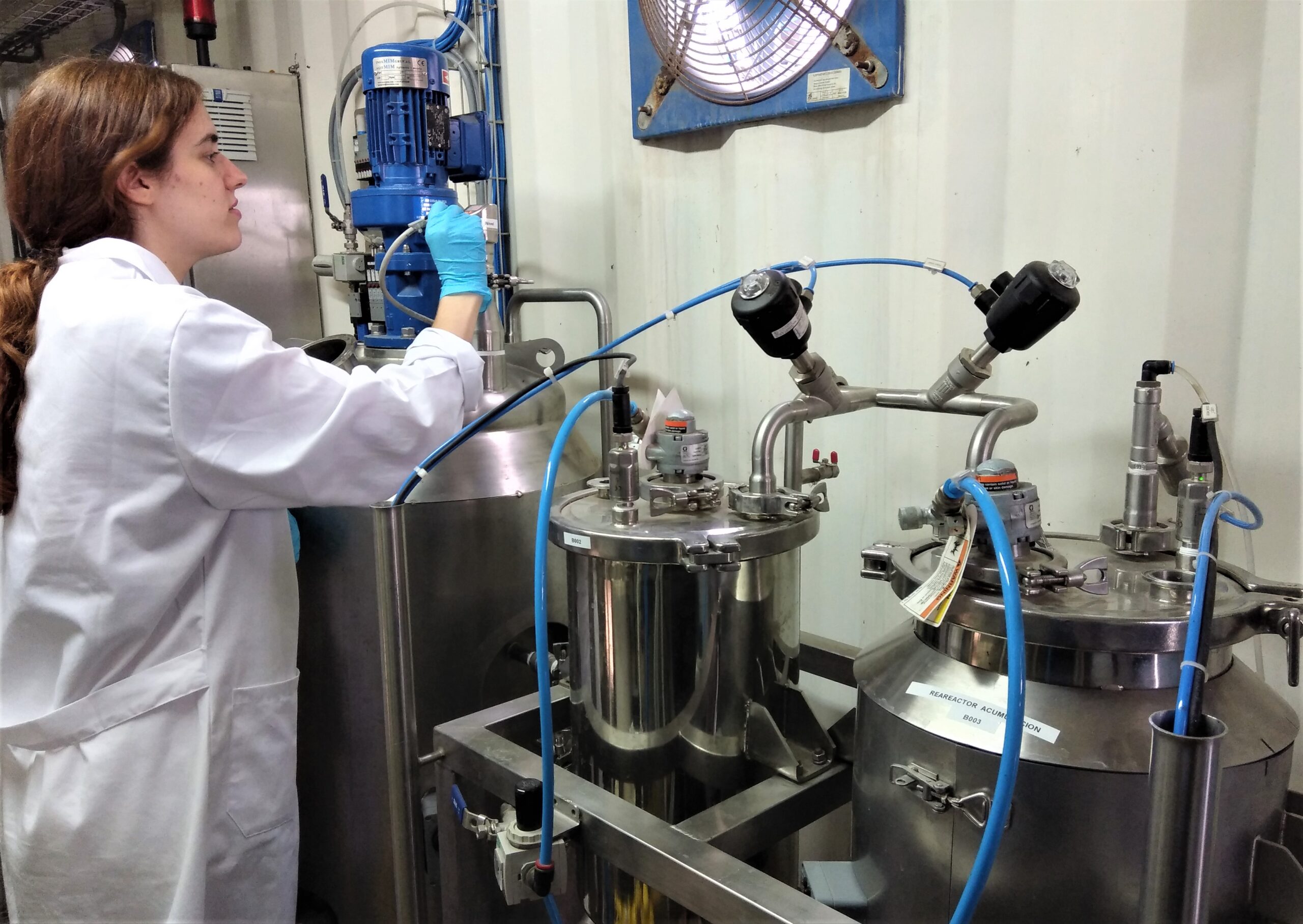
- The company successfully concludes the Bioedaria project, after developing a new biorefinery concept capable of generating value-added products for society while reducing production times and costs.
- The project has been funded by the Valencia Innovation Agency (AVI), as well as with the collaboration of the AINIA Technology Centre
Under the concept of biorefinery and circular economy, FACSA has worked for the last two years on the development of its Bioedaria project. This innovative and technological initiative has now concluded with very promising results.
This project—funded by the Valencian Innovation Agency (AVI)—aimed to transform the conventional sludge treatment process at Wastewater Treatment Plants Waters Finally, thanks to Bioedaria's technology, it has been possible to obtain up to 30% polyhydroxyalkanoates (PHAs) and 14% polyphosphates (Poly-P) from a complex waste product such as sewage sludge. Therefore, in addition to promoting the sustainable treatment of wastewater, the initiative has contributed to fostering a circular economy management model in the wastewater treatment plant environment, to valorize and give a second life to waste, minimizing the amount that ends up in landfills.
Finally, thanks to Bioedaria's technology, it has been possible to obtain up to 30 % of polyhydroxyalkanoates (PHAs) and 14 % of polyphosphates (Poly-P) from a complex waste product such as sewage sludge. Therefore, in addition to promoting the sustainable treatment of wastewater, the initiative has contributed to fostering a circular economy management model in the wastewater treatment plant environment, to valorize and give a second life to waste, minimizing the amount that ends up in landfills.
The project has developed various bioprocesses for the valorization of sewage sludge, such as two-phase anaerobic digestion for the production of volatile fatty acids (VFAs) and biogas; the production of biopolymers (PHAs or Poly-P) using mixed cultures from VFAs; and the production of biofertilizers through microalgae cultivation. In addition, different methods for the sustainable extraction of both polymers have been studied.
The project has developed various bioprocesses for the valorization of sewage sludge, such as two-phase anaerobic digestion for the production of volatile fatty acids (VFAs) and biogas; the production of biopolymers (PHAs or Poly-P) using mixed cultures from VFAs; and the production of biofertilizers through microalgae cultivation. In addition, different methods for the sustainable extraction of both polymers have been studied.
In this regard, the major challenge has been to simultaneously produce Poly-P and PHAs using mixed cultures. This technology, which has not been extensively studied previously, was one that the Bioedaria team wanted to use to transform VFAs into PHAs, as well as to recover phosphates present in wastewater in the form of Poly-P. Until now, most studies have focused on producing each biopolymer independently, but Bioedaria has achieved simultaneous co-production, thus reducing production costs and optimizing the process to obtain more products in a single step.
As part of this biorefinery system, the use of mixed microalgae cultures has also been studied for the recovery of nutrients (nitrogen, phosphorus, etc.) contained in waste streams, as well as capturing and valorizing CO₂.2 during biogas combustion. This process has yielded a biomass with a high protein content and other nutrients, intended for use as raw material in the production of a biofertilizer rich in amino acids.
Related news


Need help?
We are here for whatever you need