


19 June 2023
Facsa is investigating an innovative maintenance system for deep well pumps that will prevent supply interruptions in hundreds of municipalities.
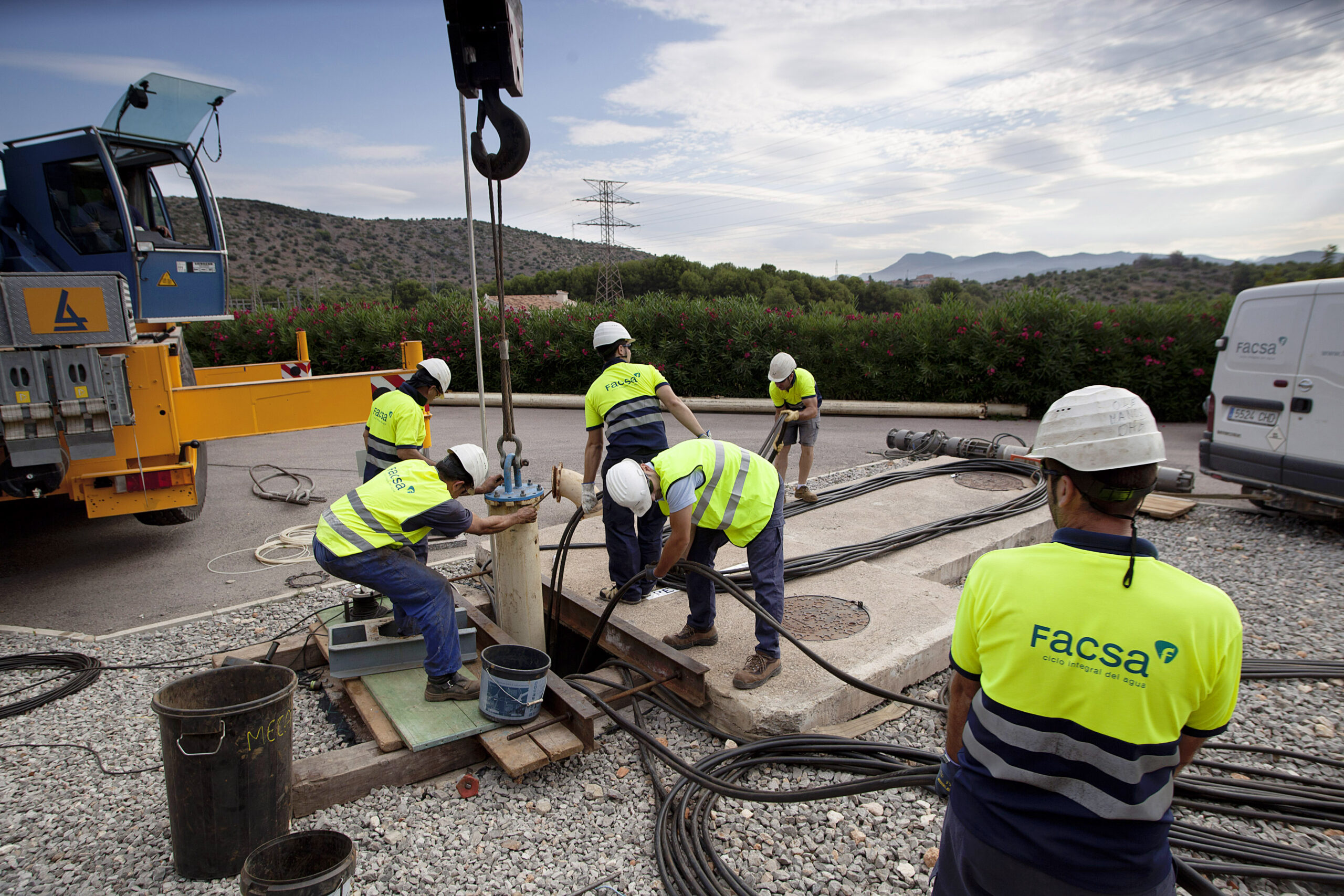
Considering all the fresh water on the planet in liquid form, groundwater, despite its apparent "invisibility", is 30 times more abundant than surface water and represents almost 80% of the total resources used for urban supply.
In some areas, groundwater is the only available water resource and its extraction system is key to meeting water needs for different uses and promoting the economic development of the area in question.
However, the depth at which submersible water extraction pumps are located in most cases makes them difficult to control and maintain, an issue that exposes municipalities to a greater risk of supply interruption.
To avoid this problem, FACSA, in collaboration with the Polytechnic University of Valencia and the University of Valladolid, is leading a new research project linked to submersible pumps in deep wells in order to develop a prevention methodology that increases the guarantee of water supply to the population.
The DeCoB project (CPP2021-008621), which has a budget of 739.310,98 euros, has been financed by MCIN/AEI /10.13039/501100011033 and by the European Union NextGenerationEU/ PRTR.
Until 2025, the consortium will work on developing an innovative system that will both detect and prevent the degradation of key components in the operation of submersible pumps, thus avoiding, firstly, the cost of replacement, and secondly, the secondary damage caused by the failure of these elements, which could lead to an interruption of supply.
“Preventing the wear and tear of key components of submersible electric pumps represents a significant economic impact and an important step forward in ensuring the supply to municipalities that implement this methodology,” explained Miguel Ortiz, Deputy Director of the Supply Area at Facsa, who also highlighted that “given the existence of more than 40 million wells worldwide, a solution like this makes a significant contribution to improving water resource management.”
Methodology
DeCoB seeks to develop a predictive methodology for axial bearing wear in submersible pumps and, therefore, pump failure. To do this, they will use the method developed in the EMBER project, which consisted of measuring, recording, and analyzing electrical parameters on the surface for early detection of submersible motor component failure.
The diagnostic methodology developed will be automatically applied to the parameters recorded by the monitoring system. Another challenge of this project is the design and implementation of an affordable, robust, reliable, and automatic monitoring system (systems for monitoring facilities already exist, but the goal is to improve these systems by significantly reducing costs by at least 50%).
The consortium
The consortium (FACSA, Polytechnic University of Valencia - Department of Electrical Engineering, and University of Valladolid - Department of Electrical Engineering) comprises a multidisciplinary team with expertise in diverse fields: from the diagnosis and monitoring of induction motors, the simulation and analysis of their signals, to the operation and maintenance of water systems, and finally, the design of monitoring devices. The consortium possesses the experience, capabilities, and facilities to meet these multidisciplinary challenges through effective collaboration.
Related news


Need help?
We are here for whatever you need