


10 November 2022
Facsa highlights its work to create renewable gases from wastewater treatment plants at the latest edition of the Ecoforum
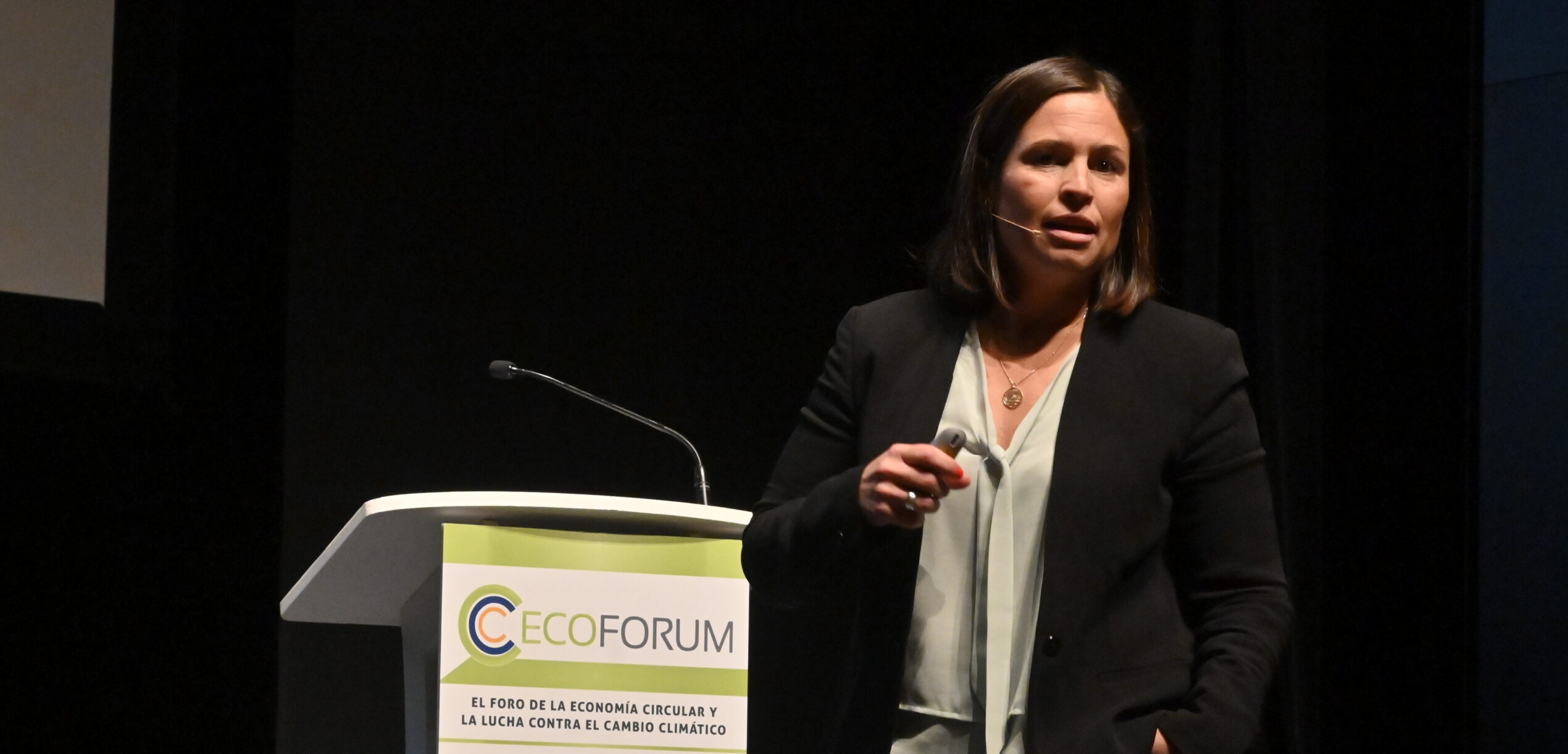
The future of energy must be linked to eliminating polluting emissions into the atmosphere, and renewable gases will play an important role in achieving this goal. For this reason FACSA, is currently developing various initiatives to reach this goal, taking advantage of one of the types of infrastructure in which they have extensive experience: wastewater treatment plants. The processes used to separate the waste from water sanitation produce residues that can be transformed into energy. This was the focus of Malú Barrera's talk at Ecoforum. Barrera is Renewable Gases Projects Coordinator at Facsa, and she stressed that research in this field is very important “to achieve the objectives of the circular economy, reduce greenhouse gases, limit the consumption of fossil fuels, mitigate the effects of climate change and be less dependent on external energy supplies”. All this with great opportunities to penetrate sectors such as industry and heavy transport.
Apart from biogas, the trend is towards the production of biomethane, ‘which is biogas from which the CO2has been removed, and which is also 100% compatible with natural gas and can be injected into the grid’, she stressed.
One of the keys to the projects in which FACSA is involved is the generation of biogas from sewage sludge through the anaerobic digestion of these components. She explained that in this way ‘the volatile fraction of waste in treatment plants is reduced, odours are eliminated and there are substrates that can be used to produce gas, and even, through treatment, fertiliser can be obtained’.
At present, the company ‘has ten plants that generate biogas, which can be transformed into energy to be consumed at the facilities themselves’, Barrera explained. Among these plants, she cited facilities in Castelló, with electrical cogeneration, while Almassora has a boiler.
But the ambition to make the most of wastewater does not end here. Malú Barrera mentioned an innovation and development project involving the use of digesters at different temperatures. This makes it possible to ‘increase biogas production’. This is already happening in places such as the Alcoi treatment plant.
Other projects
With regard to research on biomethane, Facsa presented at Ecoforum that it is working on the Biovo project, which is centred on the Catalan region of Vallès Oriental. The processes used make it possible to generate this energy, which is injected directly into the gas grid.
Most research is based on large-scale plants, but wastewater treatment is present in all types of municipalities. For this reason, Facsa is collaborating with Enagás on an interesting plan, Trovant Technology, which makes it possible to adapt all the innovations still in their infancy to plants of all sizes. A way of getting the most out of sanitation facilities.
Green hydrogen
For some time now, green hydrogen has become the great hope for the energy future. The company does not want to be left behind in this respect, and so it has a stake in the Hacdos project. Hydrogen as an energy source is obtained through the electrolysis of water, so research is under way into how wastewater can be used to contribute to this future.
Getting the most out of the potential
At Ecoforum, Barrera also reviewed the different alternatives to greenhouse gases and the need to give them more momentum. ‘The potential is not being fully exploited in our country’, Barrera pointed out, as growth ‘is slow, since in our country there are four biogas plants per million inhabitants, whereas in other European Union countries, such as France or Germany, they have multiplied’.
A course that is expected to change soon, as the Government has drawn up a biogas roadmap that aims to multiply current production by 3.8, with the goal of reaching 10.4 terawatt hours by 2030.
To this is added, more recently, the Valencian biogas roadmap, ‘which is much more ambitious than the Government's’, Barrera explained, because it seeks to multiply current generation by up to nine, from the current 0.26 terawatt hours to 2.34. She also commented that ‘on top of this, it defines the social and economic impact, with the creation of some 6,000 direct and indirect jobs and investments of some 500 million euros’.
The hydrogen race
By contrast, the outlook for green hydrogen is much more encouraging, the speaker pointed out, which gives Facsa a boost to carry out research in this field. As she indicated, ‘Spain is leading this race, as it accounts for 20% of project announcements worldwide, behind only the United States’. In the case of treatment plants, water from sewer networks can be used so that, before being treated, it can be used in the electrolysis process. Hydrogen has advantages over renewable electricity, as it can be stored, so it has great potential both in industry and in transport with high energy consumption.
Related news


Need help?
We are here for whatever you need