


2 May 2022
Facsa explains how to reduce energy expenditure in water purification at the 4th Castelló Water Forum
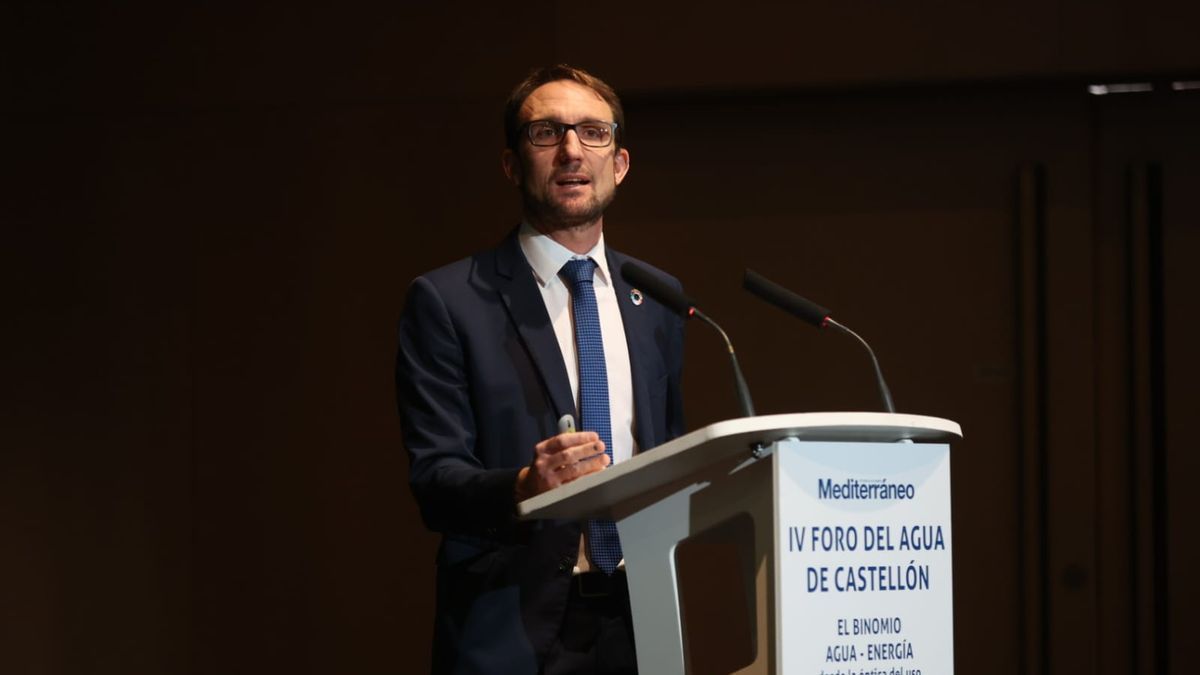
Experts in water use, treatment, and management advocated for improving water resource awareness through greater public understanding during the fourth edition of the Water Forum, entitled "Water-Energy Binomial from the Perspective of Urban and Agricultural Water Use." The event was organized by El Periódico Mediterráneo, sponsored by FACSA , and supported by the Provincial Council of Valencia and the Polytechnic University of Valencia.
Luis Basiero, director of the Sanitation and Purification area of the company FACSA, detailed during the forum the actions that the company is working on, and presented examples that are applicable to all types of facilities, from those located in small towns to large cities.
To achieve a reduction in this expenditure, with its consequent beneficial effect on saving natural resources and reducing overall costs, Basiero mentioned that it is necessary to assess ‘the size of the plant, the location and the resulting cost of transporting the water to the treatment point, or its design’, so the variables for introducing savings investments are wide-ranging.
‘Every parameter has to be measured and controlled, with processes involving asset management, proper maintenance or the use of renewable energy, such as solar’, he said.
Cases in the province
In some cases, all these proposals are already a reality. Facsa's head of Sanitation discussed the case of the Nules-la Vilavella treatment plant, where ‘a solar plant, the replacement of sludge treatment equipment and the replacement of obsolete equipment have allowed us to save 50% of energy consumption in 15 months’. Something to bear in mind given the current price of electricity.
But it can also be done in smaller municipalities, such as a photovoltaic installation at the Benafigos-la Sarratella plant, which has reduced consumption by 90%, or in Fuente La Reina and Castillo de Villamalefa.
The company, which also operates in other parts of Spain, has another milestone in Seville. The Copero treatment plant, ‘which treats 100,000 cubic metres of water a day’. In this case, they focus on the possibilities of reusing the sludge from the treated water, which can be used to generate biogas. With a cogeneration plant ‘there are days when the plant is at 98% self-consumption and is practically self-sufficient’.
Investment
For these examples to spread to all existing treatment plants in Castellón, Basiero said that it is necessary to commit to investment. ‘We already know that inflation discourages new actions, but it is a challenge that has to be taken on’. Indeed, the integrated water cycle accounts for 120 kilowatt hours of consumption per household each year. ‘That is 4% of average electricity consumption in Spanish households, which is equivalent to the average annual consumption for watching television in each household’, he explained.
New directives
Related to this, there is another challenge to consider in the coming months: the implementation of new regulations for water reuse for purposes such as agriculture. The Valencian Community ranks among the top regions in Spain in this area. Adapting processes will entail changes in plant operations, and the cost will depend on energy optimization and the use of the most sustainable technologies possible.
Related news


Need help?
We are here for whatever you need