


14 June 2021
FACSA expands TRACKER's reach to new SARS-CoV-2 variants thanks to its collaboration with the LEITAT technology center
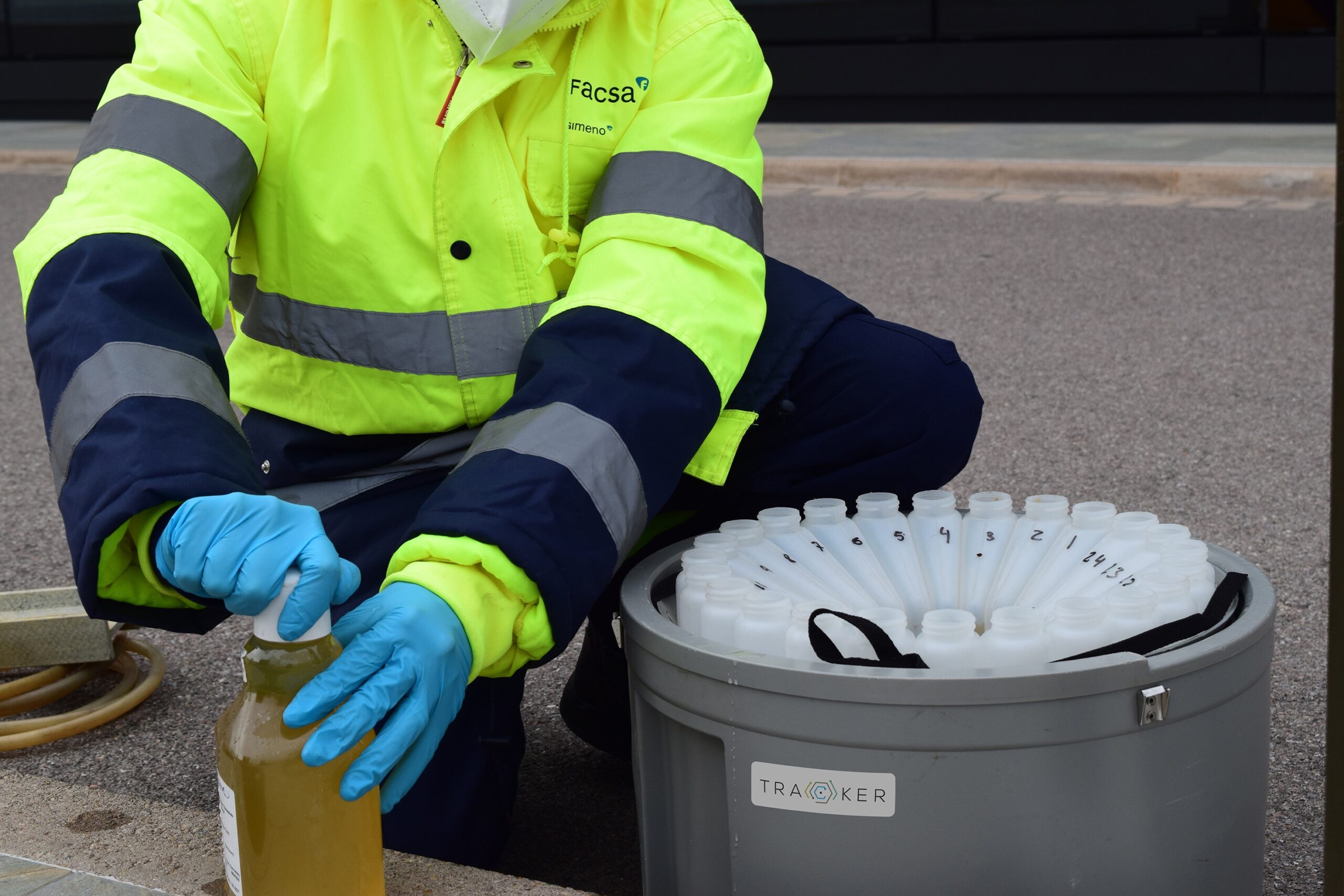
- The innovative European project to fight Covid-19 uses artificial intelligence and combines clinical monitoring indicators of SARS-CoV-2 with data obtained from wastewater to predict outbreaks
- Now, thanks to the application of targeted massive sequencing techniques, FACSA, in collaboration with LEITAT, will make it possible to detect new variants of the virus in samples in advance and study its evolution over time.
FACSA continues to innovate—within the framework of Waternology—in the development of digital solutions to improve the management of the current epidemiological situation. In this regard, the company has launched two innovative environmental monitoring projects since the beginning of the pandemic to combat COVID-19: COVID WATER and TRACKER, a European project that is now taking a further step forward thanks to collaboration with the technology center LEITAT.
The innovative platform, based on a geographic information system (GIS), combines clinical monitoring indicators for SARS-CoV-2 with data obtained from wastewater. This aims to predict outbreaks of certain variants and lineages, a capability now expanded through the joint work of both organizations. This collaboration aligns with the objectives set by the European Commission in its report of recommendations on monitoring COVID-19 and its variants in EU wastewater.
To achieve this, genomic epidemiology will be used, and an analysis will be performed using advanced genomic techniques, specifically targeted massive parallel sequencing. In this way, alongside the routine RT-PCR monitoring of wild-type variants and other new variants of concern—such as those detected in the United Kingdom, South Africa, Brazil, and India— FACSA will broaden its scope of study to also detect early on new variants that may not yet have been detected in clinical samples, and whose presence is significant and could represent a future risk to the population.
Furthermore, the analysis will allow the reconstruction of the genomic sequence of the different variants and, therefore, the study of their evolution over time in order to carry out greater control and monitoring of the virus's genetic material.
With all this, this tool - which highlights wastewater as an important source of information to improve the health of the population - continues to make it possible, among other things, to evaluate the monitoring of vaccination programs, improve the management of the epidemic by justifying the modifications between phases and continue collaborating in the control, prevention and monitoring of outbreaks together with the authorities in charge of guaranteeing public health.
The TRACKER project has been funded by the European Commission through the Horizon 2020 program (Framework Programme for Research and Innovation 2014-2020, EU Grant Agreement 101016203), after being one of the 18 selected in the first round of aid, out of a total of 135 applications from 21 different countries.
Related news


Need help?
We are here for whatever you need