


21 May 2020
FACSA discusses the efficient management of water resources
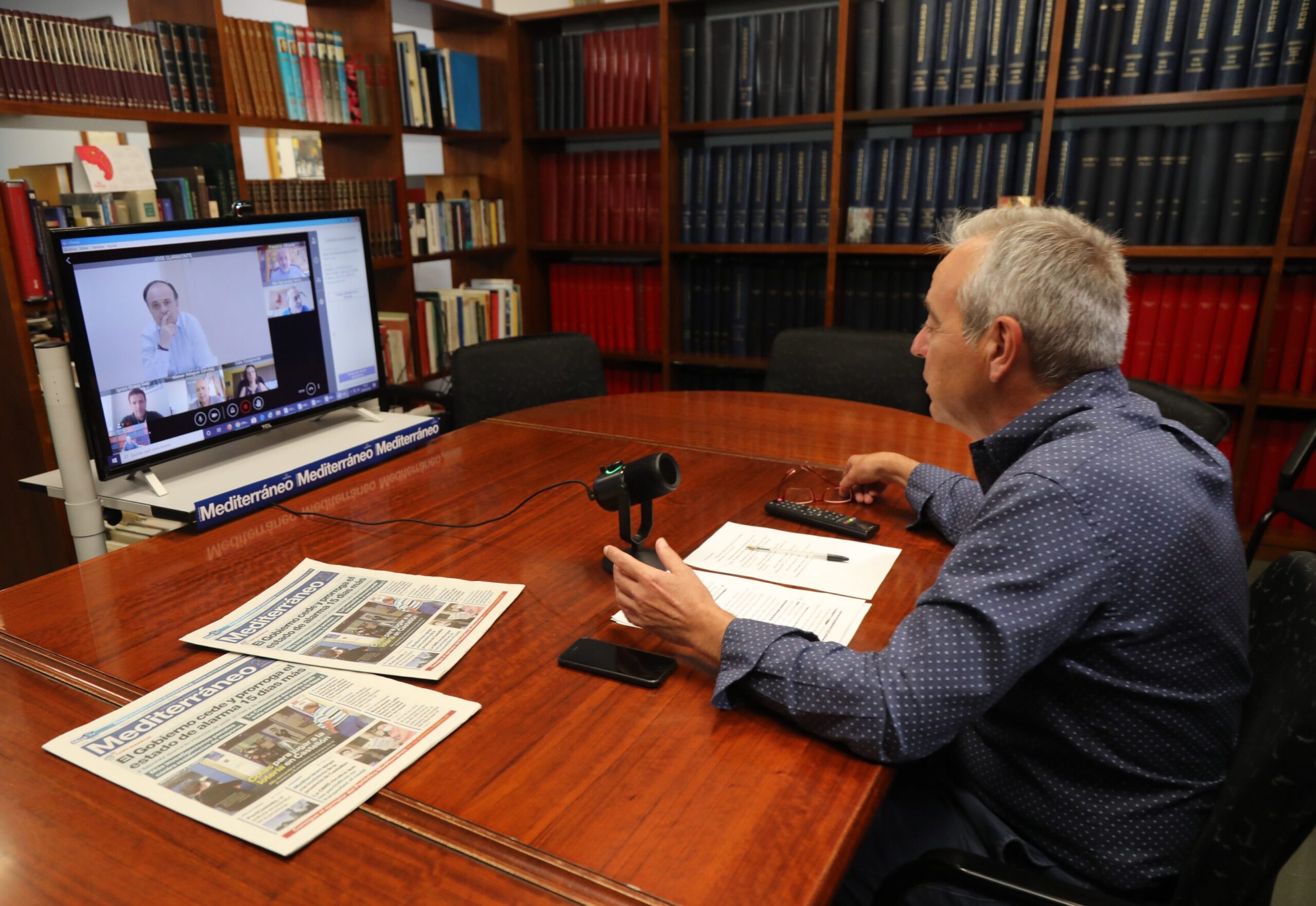
- The company is participating in the latest virtual round table of the series of meetings organized by Mediterráneo on the United Nations Sustainable Development Goals.
- Experts highlight the quality of Castelló's water, but stress the need to implement projects and infrastructure that connect plants and prevent losses in the network.
Water management presents an ever-increasing challenge, placing the optimization of water resources at the forefront of Spanish public policy. This was the main topic of discussion among the six experts who participated in the latest roundtable organized by El Periódico Mediterráneo, focusing on the Sustainable Development Goals (SDGs) established by the United Nations.
A meeting - focused on SDG 6 related to clean water and sanitation - which included the participation of José Claramonte, CEO of FACSA, and in which topics such as water quality, pollution and wastewater, the efficient use of water resources, integrated water management or related ecosystems were discussed in order to raise awareness and generate concrete measures.
In this context, experts have agreed that the quality of this resource in the province of Castelló is good "although improvable" and have highlighted the need to implement efficiency projects and infrastructure that connect different plants and prevent losses in the network to ensure the use of all resources of groundwater, surface water, desalinated or reused water.
In this regard, Claramonte has stated that to improve the quality and management of water in the province it is necessary to "seek a water pact, a political agreement, as well as establish long-term planning and seek funding to address said planning, in addition to investing in research and innovation."
Another major topic addressed during the meeting was water reuse. Claramonte stated that FACSA has invested heavily in this area, although much remains to be done, as it is not easy. She continued, explaining that "delivering reclaimed water requires investment, especially in the distribution network for industrial, agricultural, and other uses in more specific contexts, such as gardens, which need a dual network, or in the interior of the province, where distribution is more complex."
In this context, the third sanitation plan of the Valencian Community comes into play, necessary to "relaunch water reuse or improve the quality of treatments," as Claramonte concluded.
The event - sponsored by FACSA - also included the participation of the Director General of Water of the Valencian Government, Manuel Aldeguer; the professor and director of the Institute of Pesticides and Water of the Universitat Jaume I, Félix Hernández; the deputy responsible for the Water Cycle and president of Reciplaza, Ignasi Garcia; the president of the Consorcio de Aguas de la Plana, Francisco Valverde; and the head of Quality and Environment of the BP refinery, Celia Casagrande.
Related news


Need help?
We are here for whatever you need