


30 March 2021
FACSA applies artificial intelligence to improve the performance of water supply networks
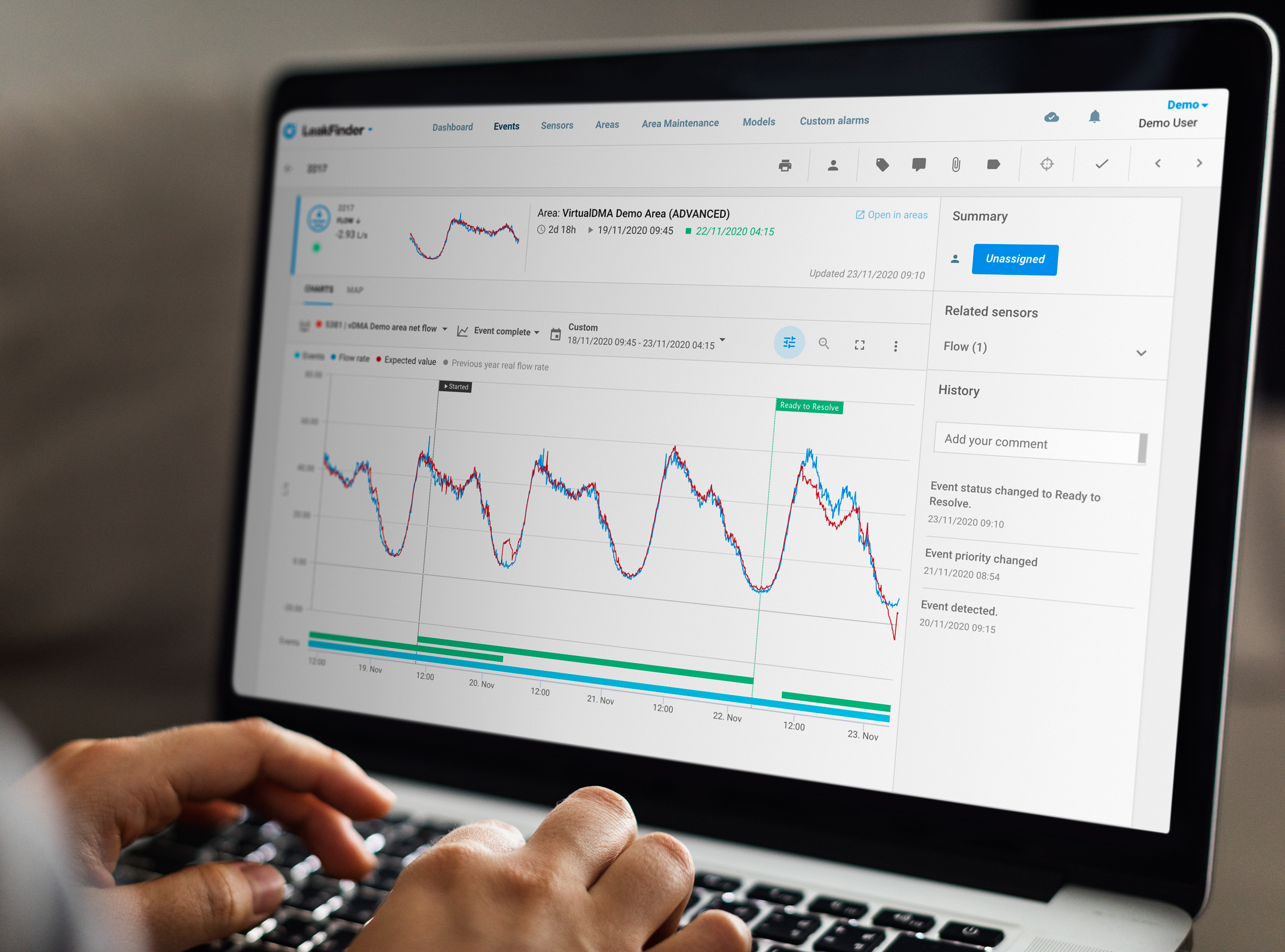
- The company is implementing a new technology to reduce water loss, minimize the risk of shortages in case of pipe breaks, and prevent potential water quality problems.
- Since the pilot project was launched, water losses due to leaks have been substantially reduced.
In a scenario where cities must increasingly prioritize resource efficiency and sustainable development, FACSA continues to advance in the incorporation of new technologies based on artificial intelligence to evolve and optimize integrated water management processes.
In this regard, one of the technological innovation projects the company is currently involved in is focused precisely on optimizing water loss levels through the use of big data, hydraulic simulation, and, above all, artificial intelligence. These new technologies form one of the strategic pillars of Waternology, the new brand recently launched by the company, which brings together a range of digital solutions for intelligent management of the entire water cycle. Specifically, this new solution corresponds to the Smart module, which incorporates technologies based on Artificial Intelligence, the Internet of Things, Big Data, and geospatial analytics.
To do this, FACSA and BuntPlanet, the technology provider, have been working for months on the development and testing of a digital solution capable of reducing real water losses (leaks) and those from the records made by the meters, categorized as apparent losses or commercial losses.
Thanks to hydraulic simulation and continuous monitoring of numerous flow and pressure signals, the system analyzes the interrelationship between these signals and the different consumption scenarios that can occur in the network. It quickly and accurately detects any anomalous variations that may be caused by previously undetectable leaks. In this way, the tool reports both the magnitude of the leak and its location in the network, significantly accelerating repairs, not only in traditional sectors but also in virtual ones. This favors open networks, thus minimizing any potential impact on water quality.
This technology is currently being tested in various services managed by FACSA. For example, in a municipality of 35.000 inhabitants, nearly 400 abnormal situations have already been detected and resolved thanks to this new technology, more than 70 of which were leaks. Furthermore, average nighttime water consumption resulting from water losses has been significantly reduced.
One of the main advantages of one of the two new software programs that make up the new solution, LeakFinder, is the “virtual sectorization” which, unlike other leak detection and pre-location solutions, does not reduce its positioning accuracy when working with large sectors, a fact that minimizes the risk of shortages in case of pipe breakage, avoids water quality problems due to stagnation and saves costs in instrumentation and maintenance.
This solution, combined with WaterMeters - the software used by FACSA for detecting losses from meter readings - allows for continuous performance calculations, generating a real-time analysis of the meter stock and the supply network, so that if the system detects anomalies, the company can act much more quickly and accurately.
Regarding this innovative system, Francesc Gavara, head of the metrology department at FACSA, stated that the initial results are very positive. He explained that "the pilot project is providing valuable experience in the use of artificial intelligence that can benefit other integrated water cycle management processes, leading to greater efficiency and agility in decision-making." Furthermore, he concluded, "this technological initiative will help municipalities advance in building a sustainable city model centered on water resources."
Now the project is entering its final stage and is showing promising results, as confirmed by the company, which is already studying the implementation of this technology in other municipalities.
Related news


Need help?
We are here for whatever you need