


7 October 2020
FACSA and UJI will apply epidemiological criteria in the detection of SARS-CoV-2 in wastewater
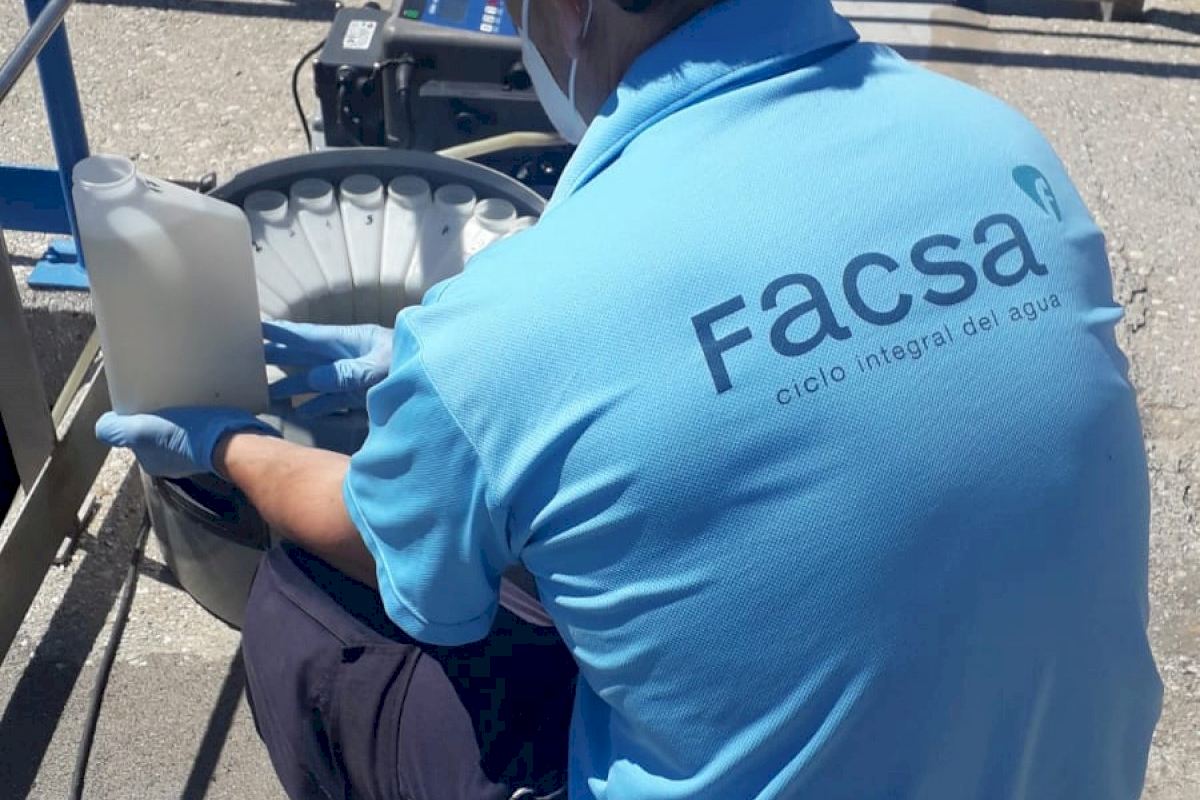
- The research is being carried out by the Grupo Gimeno company and the University Institute of Pesticides and Water (IUPA) of the public University of Castelló
The Universitat Jaume I of Castellón (UJI) has signed a research agreement with the company FACSA for the joint development of the project "The role of wastewater in the detection of Covid-19: evolution of the pandemic and role in the preventive control of future outbreaks of SARS-CoV-2", framed within the COVID WATER study financed by the Valencian Innovation Agency (AVI).
This research project involves monitoring areas affected by the Covid-19 pandemic or of geographical importance within the Valencian Community to understand the evolution of the SARS-CoV-2 outbreak. In this context, the diagnosis will be carried out at various points in the sewer network and at the inlets of wastewater treatment plants (WWTPs), applying the principles of wastewater-based epidemiology (WBE). This relatively new scientific discipline aims to apply analytical sciences to wastewater analysis to determine human exposure to various chemical compounds or pathogens.
This will allow us to understand the scope of the problem indirectly, given the increased capacity to detect SARS-CoV-2, and will also provide an early warning system in the future, since preventive epidemiology based on the study of wastewater can be a valuable tool for understanding the evolution of this and future pandemics, as well as detecting new outbreaks or resurgences of infection early in the populations under study.
Therefore, the work to be carried out by the UJI multidisciplinary team will focus on two aspects. The first will aim to obtain epidemiological indicators (number of confirmed cases, incidence and prevalence rates) in the populations included in the study, and the second will be to correlate the epidemiological data with those obtained from quantifying the virus genome in wastewater from the study populations, apply the principles of WBE, evaluate the data obtained, and explore the possibilities of applying this approach in future studies.
As Ernesto Santateresa, head of the Environmental Quality area at FACSA, pointed out, "the epidemiology study through the analytical monitoring of wastewater will allow us to have aggregated information on the progression of the disease in an urban agglomeration which, together with the information published by the health authorities on the clinical progression of the pandemic, will make it possible to compare and analyse the relationships with regard to what is detected in the water, thanks to advanced information technologies that help us draw conclusions and set up tools that will allow the authorities to make better decisions regarding the control of this pandemic, its resurgences and even future pandemics».
It should be noted that, as Santateresa continued, "these studies have already proven effective for monitoring other diseases, such as the polio virus in Israel (2013) or the studies on drug and medicine consumption by the population that are carried out periodically in the city of Castelló along with other European cities».
The work to be carried out at the UJI will be coordinated by Professor Félix Hernández, director of the University Institute of Pesticides and Water (IUPA), and will involve a multidisciplinary team of 10 researchers specializing in analytical chemistry, epidemiology—including the approach based on wastewater analysis—and microbiology. Ernesto Santateresa Forcada and Nuria Zamorano López will act as liaisons for FACSA, and they also have a team at FACSA specifically dedicated to developing research related to the detection of SARS-CoV-2 genetic material in wastewater.
Professor Félix Hernández emphasized the need for multidisciplinary teams to work on complex issues such as those addressed in this project. «We need specialists not only in clinical epidemiology but also in wastewater management, as well as experts in PCR analysis of complex samples like wastewater. Furthermore, collaboration between FACSA and the UJI is essential for organizing the sampling process effectively (sampling period and locations, sample preservation). The work we are carrying out is a good example of efficient and enriching collaboration between industry and academia, from which society can clearly benefit on a matter of such great concern, with consequences as serious as the pandemic we are currently experiencing».
This collaboration falls within the framework of the COVID WATER project, funded by the Valencian Innovation Agency as part of a call for projects that would enhance the Valencian innovation system's capabilities in the fight against COVID-19. Specifically, COVIDWATER aims to improve Spain's preventative capacity in the face of the current COVID-19 epidemic caused by the SARS-CoV-2 virus. This project will develop an epidemiological map that combines experimental results obtained from wastewater analysis, clinical diagnostic data, and other relevant indicators, such as socioeconomic and environmental data.
Related news


Need help?
We are here for whatever you need