


21 April 2023
The Balearic Islands are accelerating their efforts to regenerate water resources as a key part of the solution to the drought.
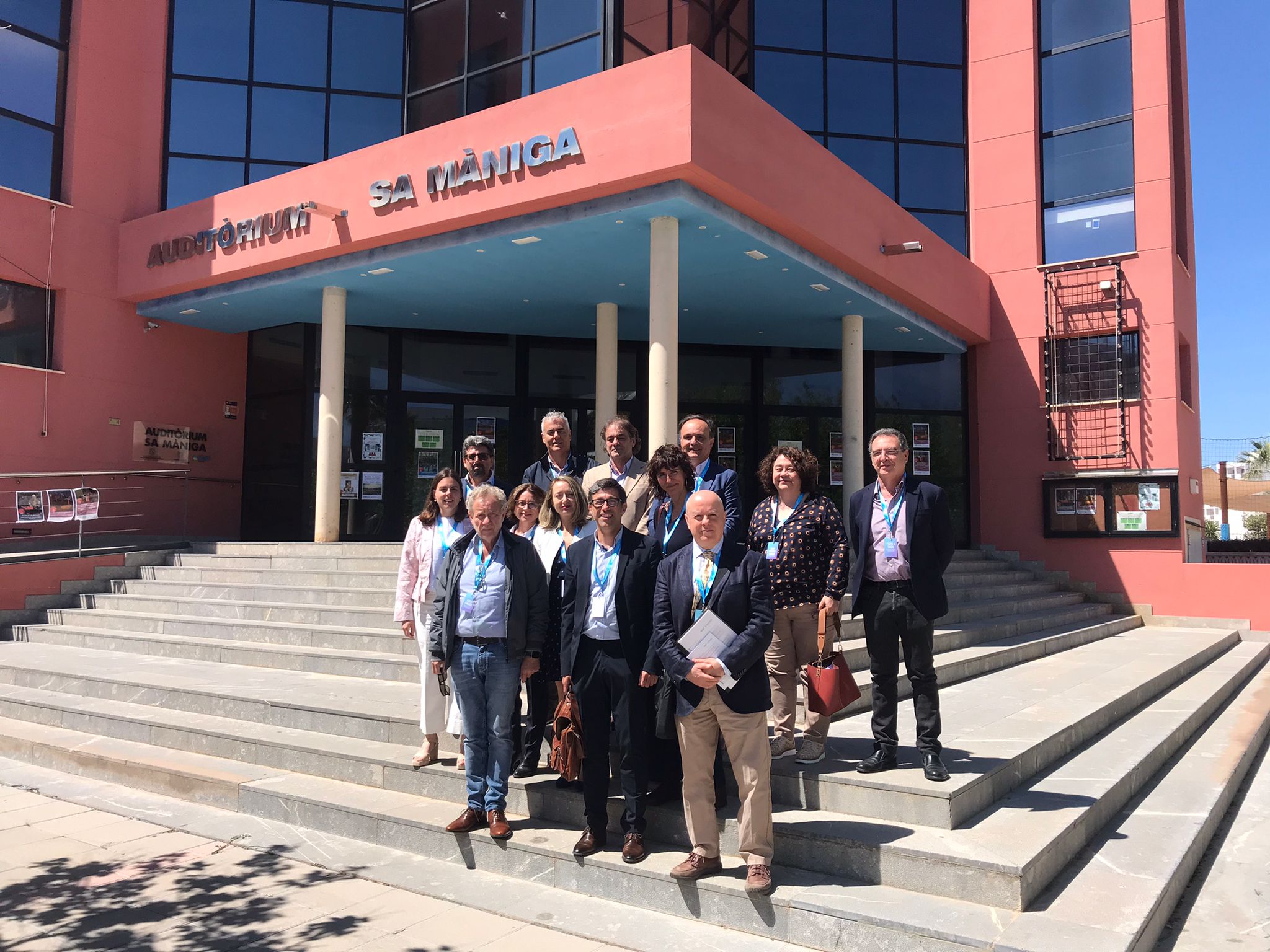
The mayor of Sant Llorenç des Cardassar, the director general of water resources for the Balearic Islands, and the CEO of FACSA inaugurated the conference “Present and Future of Reclaimed Water: The Balearic Islands’ Response.” This event, organized by the Sant Llorenç des Cardassar City Council and the water utility Facsa, brought together more than 70 representatives from government, water companies, the scientific community, and users to discuss advancing water reuse.
Balearic Islands, among the communities that regenerate the most water
The first thematic block analyzed the scenario of water reuse in Spain, as well as one of the most common applications of this resource, irrigation, taking advantage of the example of the Balearic Islands as a success story.
Among the key aspects of the new landscape of reuse, the expert in the field Pedro Simón, technical director of the Regional Sanitation and Purification Entity of Murcia (ESAMUR), pointed out the importance of political will, the trust of users, the delimitation of the responsibilities of the agents involved (operator, transport and end users), the necessary investment, as well as the operating costs, and who should finance them.
According to the data presented, 33% of the water treated at the 79 wastewater treatment plants (WWTPs) in the Balearic Islands is recycled, placing this region among the most advanced in Spain in terms of reuse, behind Murcia (71,8%) and the Valencian Community (47,5%), according to data from the National Institute of Statistics. The main use of reclaimed water in the Balearic Islands is for irrigating parks and gardens, golf courses, and some crops—only woody ones—although its applications are very broad.
These results, while showing that significant progress is still needed, confirm the immense value of treated wastewater in addressing the serious problem of prolonged water scarcity increasingly affecting regions, including the Balearic Islands. In this area, when water reserves reach critically low levels, it not only threatens agriculture but also tourism—the main economic driver—as it significantly increases water demand and accounts for 25% of the region's annual water consumption, with major peaks in the summer, exacerbating the situation.
Regarding its application to irrigation systems, Fernando Fernández, Director General of Agriculture, Livestock and Rural Development of the Balearic Government, highlighted the opportunity that reclaimed water represents for the agricultural sector, as well as the positive reception from farmers, and expectations for any infrastructure that favors its use for irrigation.
In this regard, he presented the new General Plan for the use and optimization of reclaimed water for irrigation in the Balearic Islands for the period 2023-2027. This plan is adapted to the realities of the islands' agricultural sector and aims, among other things, to promote and consolidate the use of reclaimed water as an alternative to conventional water, strengthening the network to ensure it functions properly, optimally, and with stable quality, and expanding the network in areas where the agricultural sector requires it and where it would provide a substantial environmental benefit by reducing pressure on aquifers.
Health guarantees
Next, in a second session, the legal status and health guarantees for reclaimed water were addressed. Teresa M. Navarro, an expert in administrative law and secretary of INUAMA, emphasized the need to incorporate a holistic view of risk into management to comply with the new regulations for reclaimed water, both for owners of water treatment plants and for other stakeholders. This issue, which requires collaboration and coordination among the parties, is of utmost importance as it will become a requirement for future water treatment concessions.
For her part, Mercedes Gumà, head of the environmental health service of the Balearic Government, highlighted the need to strengthen information and education for citizens, in order to ensure safe water consumption and proper use.
The success stories presented during the event confirmed the potential of reclaimed water as a resource that complements existing supplies and provides a safeguard against drought. In this regard, the speakers expressed confidence in its potential for aquifer recharge, with the aim of minimizing discharges into the sea and contributing to meeting the demand for drinking water. This would add a greater degree of circularity to water management, as demonstrated through real-world examples by leading organizations in this field, such as the Costa Brava Water Consortium, Abaqua, the Sant Llorenç City Council, Emaya, Calvià 2000, and Facsa.
Sant Llorenç des Cardassar, a success story
Sant Llorenç des Cardassar reaffirms its commitment to the use of wastewater as an opportunity to address the climate emergency and guarantee future water supply.
The municipality, which has invested €15 million over the last eight years and has become a leader in sanitation and wastewater treatment, currently regenerates 15.000.000% of its incoming wastewater to supply water to urban and residential gardens, as well as for the treatment plant's service water, according to Magdalena Campins, FACSA's plant manager . Furthermore, the municipality is planning further improvements to the tertiary treatment process to enhance water quality, as well as to the control and automation of the reclaimed water network, with the goal of reusing 50% of its incoming water by 2030.
Related news


Need help?
We are here for whatever you need