


20 October 2023
Facsa advocates at the Ecoforum for the use of renewable gas to decarbonize the primary and industrial sectors
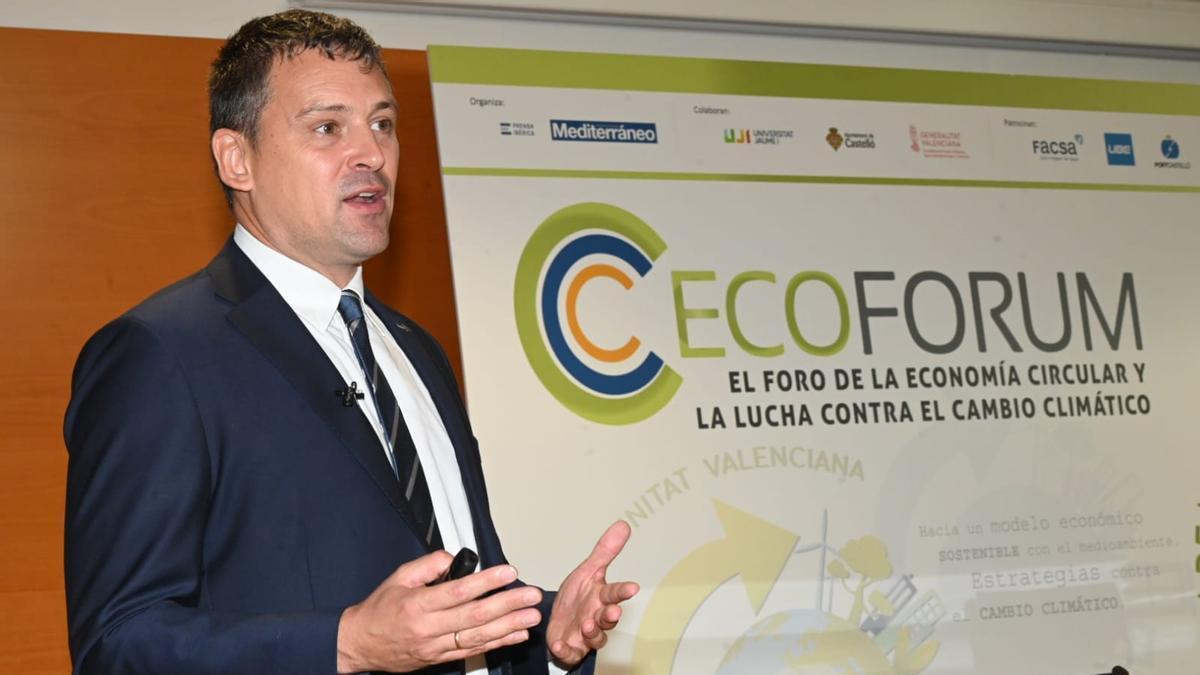
The use of renewable gas as a key tool for the decarbonization of the primary and industrial sectors was the focus of the presentation at the Ecoforum by Luis Puchades, director of Biovic, in which he delved into the birth of the renewable gas industry in Spain, especially the growth of biomethane.
Initially, the focus was on biogas, highlighting its energy and environmental value, noting that "biogas is not only a renewable energy source, but also plays a significant role in waste treatment, improving wastewater treatment efficiency, and creating biofertilizer." The speaker also pointed out that biogas's success lies in the integration of all its related aspects, illustrating its appeal by highlighting the fact that over 20.000 biogas plants are currently operating in Europe.
As he pointed out, renewable gas must be understood in a holistic way, taking into account all aspects, from engineering to the construction and maintenance of the projects. “We cover the whole renewable gas value chain: waste treatment, biogas purification systems and the production of organic fertilisers from that digestate”, he explained. This last aspect is very relevant, as the production of fertilisers will help reduce Spain's dependence on other European countries.
Biogas flexibility
One of the characteristics of biogas is its flexibility, as the amount of waste it can treat is very wide and includes products coming, for example, from dairies, canneries or slaughterhouses. “Biogas allows us to recover value from waste of very different origins”, he said.
To illustrate its potential, Puchades pointed out that around 60 million tonnes of slurry and manure are generated every year. “We have a raw material that has to be managed properly and the potential for energy generation is enormous. It could exceed 150 terawatts of energy”. However, although the “energy potential is large, the environmental and decarbonising potential is even greater”.
The director of Biovic stressed that biogas projects are “an opportunity for the Valencian Community, and the Administration is aware of it”, especially considering the powerful agri-food industry the region enjoys. There has come a time when consumers no longer ask only for high-quality products, but also for a proper carbon footprint. “It is an aspect that adds value and gives the agri-food industry an image and brand of sustainability”, he continued.
Biomethane, key role
If biogas is generated from the treatment of waste, biomethane, the next renewable gas that Puchades referred to, is obtained by removing the gases that are not of interest, which makes it possible to produce the same gas as is in the natural gas network. “Biomethane is a biogas that is refined to quality levels until it reaches natural gas”, he clarified.
One of its great benefits is that it can be injected into the gas system and does not require changes to the infrastructure around it. “We must commit to our own sources of energy and become independent of external sources. Biomethane is the generation of a fuel equivalent to natural gas and can be injected into the gas system. And you can produce it yourself, which is very important”, he pointed out.
Finally, he defended the potential of using renewable gas. “It is a mature technology, it is economically viable and it is aligned with the United Nations SDGs. It is the time for renewable gas”, he concluded.
Related news


Need help?
We are here for whatever you need