


22 September 2021
A study by Hydrens demonstrates the effectiveness of ozone in eliminating SARS-CoV-2 in public transport
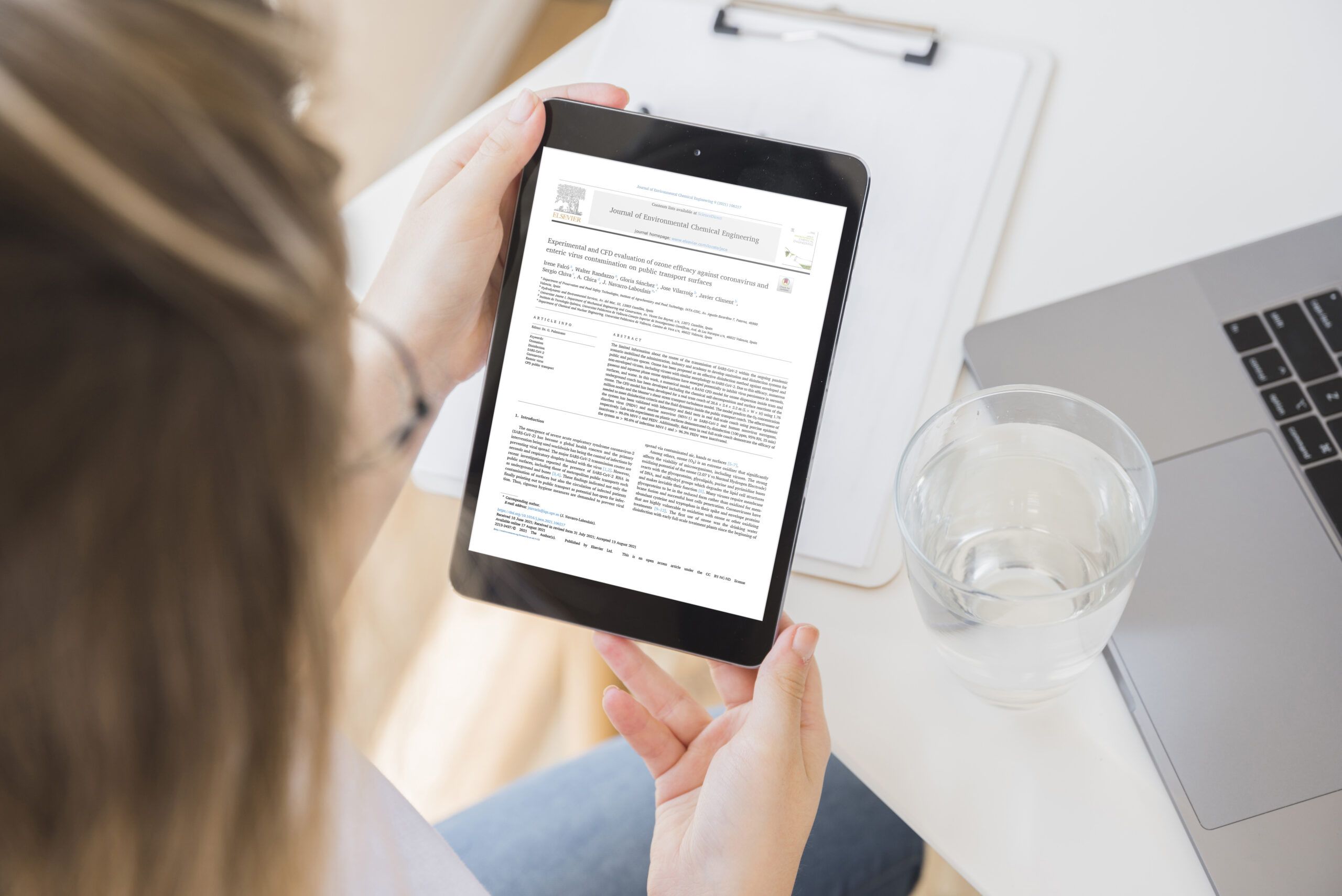
Hydrens -the consultancy of Gimeno Group consultancy specializing in computational fluid dynamics (CFD) - has published, together with the Universitat Politècnica de València (UPV), the Consejo Superior de Investigaciones Científicas (CSIC), the Universitat Jaume I de Castelló (UJI) and the Instituto de Agroquímica y Tecnología de los Alimentos (IATA-CSIC), a study demonstrating the effectiveness of ozone as a valid disinfection process against SARS-CoV-2 and other viruses in public transport.
Specifically, the Hydrens research team developed a numerical model that estimates the ozone concentration needed to meet disinfection criteria, taking into account the geometry and volume of the space to be treated, the type of materials inside and their ability to absorb ozone, as well as the characteristics of the pumping-distribution system used.
The model was validated in various tests, both in the laboratory and in metro and tram cars—provided by Ferrocarrils de la Generalitat Valenciana—in which an ozonation system was installed. This system progressively injected the gas until the concentration determined by the model was reached, along with a catalyst for the decomposition of residual ozone, preventing its release into the atmosphere. All of this was done using porcine epidemic diarrhea virus (PEDV) and murine norovirus (MNV-1) as substitutes for SARS-CoV-2 and human norovirus, respectively.
Regarding its application, the study team emphasizes that it must be carried out with empty train cars, without passengers, starting with the injection of ozone and ending with the catalytic decomposition of the residual ozone. They also highlight that using ozone in this way allows for the disinfection of areas that cannot be reached with other methods, such as ultraviolet light, as it does not penetrate all corners of the carriages.
The work has been published in the Journal of Environmental Chemical Engineering and has also had the collaboration of the Valencian companies LIC and Vareser.
Related news


Need help?
We are here for whatever you need