


8 March 2021
Grupo Gimeno joins an alliance to promote photovoltaic solar energy in the Valencian territory
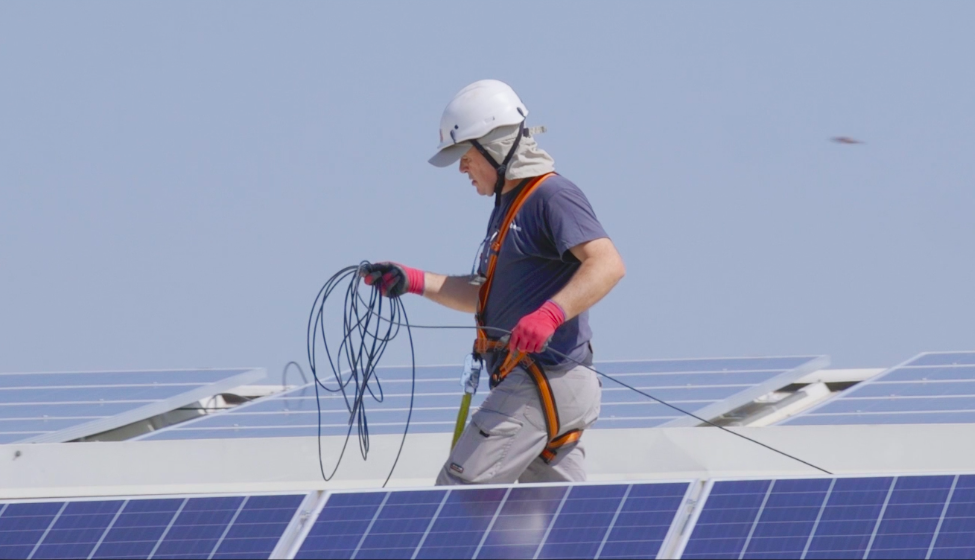
- The project proposal, already submitted to the Government, seeks to revitalize and finance 300 MW of photovoltaic solar energy in quarries, mines, landfills or demolished industrial parks in the Valencian Community through the EU's Next Generation funds.
- The alliance, led by Avaesen, includes the collaboration of Arival, the Ministry of Sustainable Economy, and major companies such as Pavasal, NRG Investment, Prosolia, Grupotec, Pavener, Valfortec, and Corporación F. Turia.
Gimeno Group continues its work to promote renewable energy. This time, with Obremo joining an ambitious project proposal that aims to revitalize and finance 300 MW of photovoltaic solar energy in quarries, mines, landfills, and demolished industrial parks in the Valencian Community.
The expression of interest, led by the Valencian Association of Renewable Energy Companies (Avaesen), has the support of Arival, the Ministry of Sustainable Economy, and major Valencian companies such as Pavasal, NRG Investment, Prosolia, Grupotec, Pavener, Valfortec, and Corporación F. Turia. It has already been submitted to the Government to secure funding through the European Next Generation EU funds, a recovery plan that will pave the way out of the crisis and lay the foundations for a modern and more sustainable Europe.
The primary objective of this consortium is to promote renewable energy in areas that, due to their costs, are not attractive to photovoltaic developers, but which offer other benefits for the environment and society. The majority of the investment in this initiative would be generated in inland municipalities, where depopulation is a problem, contributing to job creation and economic growth in the region. An investment of €275 million and the creation of up to 1.000 jobs are projected.
The most groundbreaking and innovative proposal is the placement of solar panels on the water in irrigation ponds large enough to accommodate it—approximately 180 throughout the region. This is an ideal alternative for municipalities with limited land availability or strong competition for agricultural use, and it could generate up to 50 MW of the total 350 MW that the project aims to achieve.
Related news


Need help?
We are here for whatever you need