


17 November 2025
Nealis reinforces its commitment to innovation in air quality at the 4th Castellón Innovation Forum
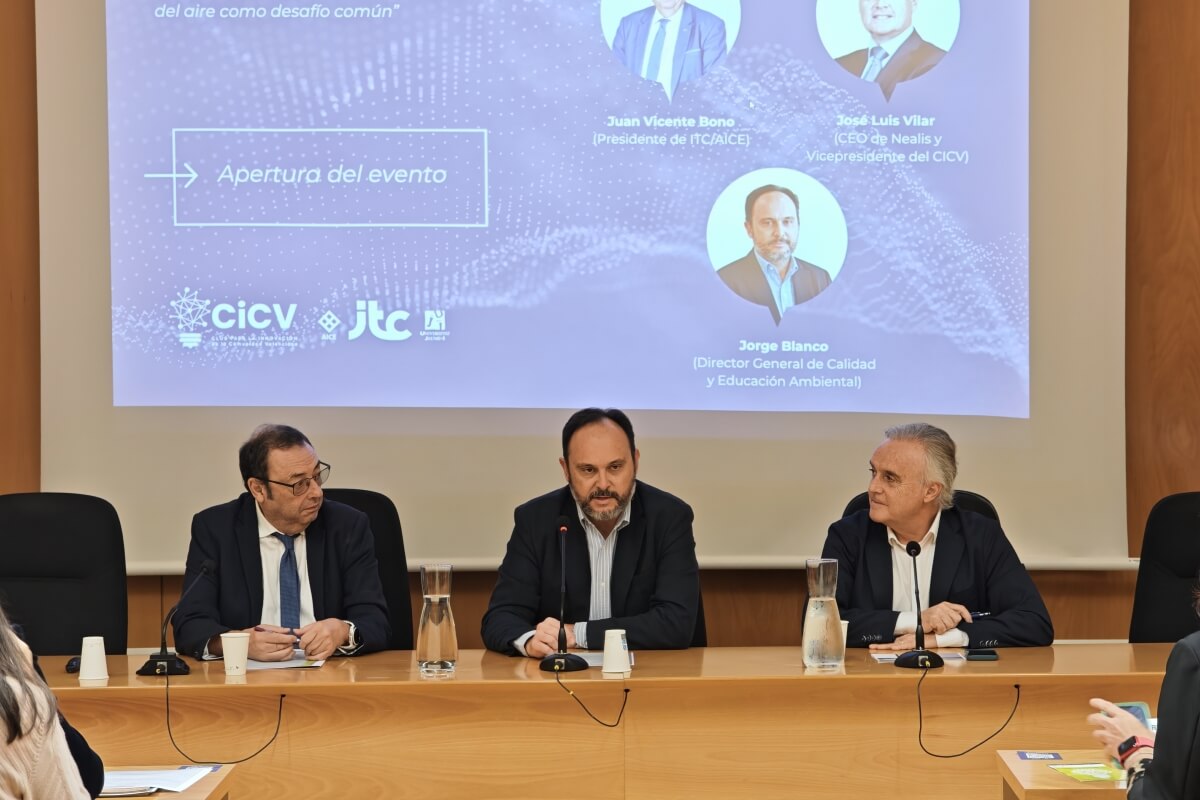
The 4th Castellón Innovation Forum, organised by the Instituto de Tecnología Cerámica (ITC) and the Innovation Club of the Valencian Community (CICV), brought together nearly 50 institutional, business and research representatives to address one of today's major challenges: improving air quality. Nealis was present from the start of the event, with a talk by José Luis Vilar, Corporate General Manager of Nealis, at the opening ceremony, while Hydrens took part as an expert voice in the technical part of the forum.
Under the motto ‘Breathing together, innovating together’, the event highlighted the need to work in a coordinated way between authorities, companies and research centres to move towards healthier environments. During the opening session, representatives of ITC-AICE and CICV stressed the importance of forging alliances that drive innovative, sustainable solutions.
The programme provided an insight into projects aimed at monitoring and improving air quality in different settings. Among them were the European project LIFE PMFree-Ports and the Breathing Well initiative, focused on improving air in hospital facilities.
The participation of Hydrens ' participation was particularly relevant in the panel dedicated to air quality modeling, where Javier Climent, Hydrens' director, explained how the use of data, simulations, and predictive models allows for anticipating emissions and designing corrective measures tailored to each environment. Climent emphasized the need to combine monitoring, artificial intelligence, and physical models to respond effectively to complex situations.
The forum's second panel addressed the complexity of urban pollution, characterized by multiple sources and the need to involve citizens in adopting measures. The experts noted that new European legislation will tighten emissions limits by 2030, requiring updated air quality plans and strengthened monitoring infrastructure.
Discussions have also focused on the difficulty of measuring bad odors, a technical and regulatory challenge, and on the behavior of secondary polluting particles, which can travel long distances and require coordinated management between territories.
The meeting concluded with a visit to the ITC laboratories, where research is being conducted to improve air quality through cutting-edge technological solutions.
Related news


Need help?
We are here for whatever you need