


28 November 2025
The FACSA-FOVASA Chair brings together expert voices and municipalities at the UPV to analyze the new waste taxation and Pay-as-you-throw schemes.
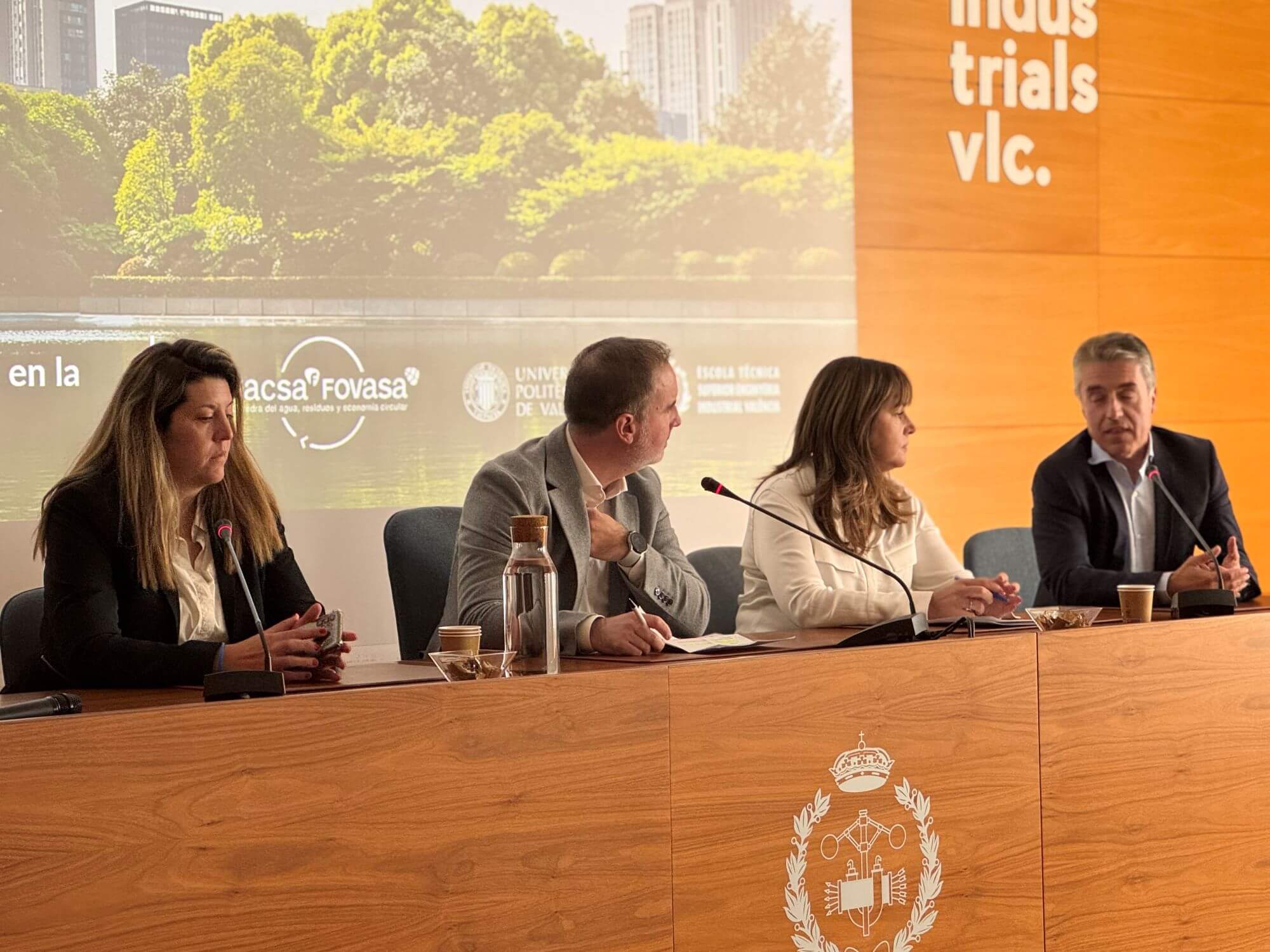
In a context marked by the need to adapt municipal waste management to new regulatory frameworks and European requirements in environmental taxation, the FACSA–FOVASA Chair of the Polytechnic University of Valencia (UPV) has promoted a technical conference aimed at providing clarity and sharing real experiences on the implementation of Pay-as-you-throw (PxG) and the changes that the new taxation will bring.
The meeting brought together more than 80 professionals from the sector, including municipal technicians, mayors, councilors and waste management specialists, with the aim of analyzing how new regulatory frameworks are redefining local strategies.
The program opened with a speech by Jorge Blanco, Director General of Environmental Quality and Education at the Ministry of the Environment, who highlighted the principle of "whoever pollutes less, pays less" as the central focus of the fiscal policy that will define the coming years.
Next, Lourdes Ariza, from the Vallès Oriental Waste Management Consortium, shared the experience of this Catalan region in the implementation of efficient selective collection systems.
Pedreguer and Sax: two reference cases in the Valencian Community
The Pedreguer Town Council, represented by its Environment Councillor, Ferran Lloret, explained the transformation process the municipality has undergone in an interview conducted by FOVASA's Communications Manager, Esther García. In 2020, Pedreguer had a traditional system in which residual waste accounted for almost 90% of its waste. Today, it has evolved towards an advanced model that combines door-to-door collection and drop-off points with access control. This change has allowed the municipality to position itself well above the Valencian average in recycling and prepare for the implementation of Pay-as-you-throw (PAY-as-you-throw) schemes.
Subsequently, the mayor of Sax, Laura Estevan, detailed the municipality's transition to the PxG and the results obtained, both in the reduction of waste and in the improvement of citizen behavior.
Taxation, digitalization and future challenges
The section dedicated to taxation included the presentation of the report “Waste rates in Spain 2025”, by Ignasi Puig, from the Waste Taxation Observatory of the Fundació ENT, which analyzed the current state of municipal rates and the adjustments needed to adapt them to the European principle of “whoever pollutes pays”.
For his part, Alberto García, from Fovasa Medioambiente, presented digitization solutions for the identification and traceability of urban waste, an essential condition for implementing Pay-as-You-Generate models effectively and with guarantees.
The day concluded with a round table discussion moderated by Eduardo Benetó, director of the Valencia area of Fovasa Medioambiente, which addressed the main lessons learned and future challenges in urban waste management. Participants included Lourdes Ariza; Magdalena Martínez, mayor of Biar and deputy for the Environment, Energy, and Urban Solid Waste of Alicante; and Juan Pablo Mateo, general manager of Fovasa Medioambiente.
The event reaffirms the role of the FACSA-FOVASA Chair as a space for technical dialogue and knowledge transfer between administration, university and the professional sector at a key moment to advance the European objectives of waste reduction and valorization.
Related news


Need help?
We are here for whatever you need