


3 October 2024
Fobesa presents its history and commitment to Castellón at the Ecoforum
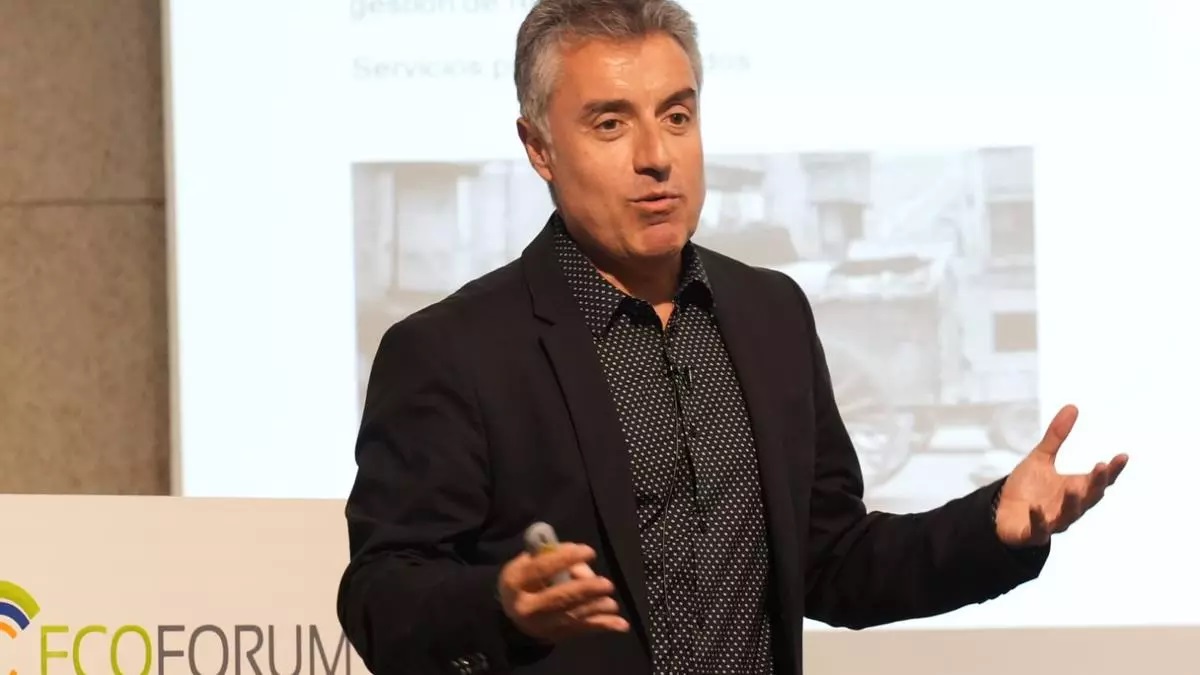
The Ecoforum, the forum on the circular economy and the fight against climate change, held this Wednesday at the Universitat Jaume I in Castellón, featured a presentation by Juan Pablo Mateo, CEO of Fobesa. During his talk, Mateo offered a historical overview of the evolution of environmental services in Castellón, linking key milestones in the sector with the trajectory of the company, founded in 1964.
Mateo highlighted how the company's early years coincided with a critical period for waste management in the province. ‘The 1960s marked a turning point, with greater waste generation and the appearance of uncontrolled dumping,’ he explained. Fobesa, which was born in Benicàssim, witnessed how the sector moved from rudimentary systems to a high degree of technological sophistication.
In his speech, he addressed the different stages that have characterised waste management in Castellón. During the 1980s, a first significant step was taken with the appearance of the first environmental protection laws and the introduction of collection and recycling systems. ‘At that time, the first collection lorries, street cleaning and glass containers emerged,’ he noted.
The 90s marked the beginning of waste separation at the source, the creation of eco-parks, and the expansion of Fobesa, which built its first waste treatment plant in Onda. ‘We also began to adapt to European guidelines, with the waste law and the appearance of concepts such as the circular economy,’ he added.
From the turn of the century, Fobesa consolidated its growth, expanding into other provinces and adapting to a constantly evolving sector. Mateo highlighted how technology and digitalization have enabled progress towards more efficient and sustainable management, with the creation of recycling plants and the introduction of recycling fees.
Looking ahead, he emphasized that the environmental sector is focused on key areas such as carbon neutrality and waste valorization, including biogas production. He also highlighted the importance of citizen participation and the use of big data to optimize services.
The director of Fobesa closed his speech by pointing out the major challenges facing the sector in the coming years. ‘The implementation of new technologies, efficiency and transparency are key to achieving sustainability objectives, but it is a task that involves all of us: the public sector, the private sector and citizens,’ he stressed.
Related news


Need help?
We are here for whatever you need