


4 February 2021
Fobesa-Fovasa and Ingelia are promoting a sustainable technology to transform pruning waste and other plant residues into fertilizers and biomaterials
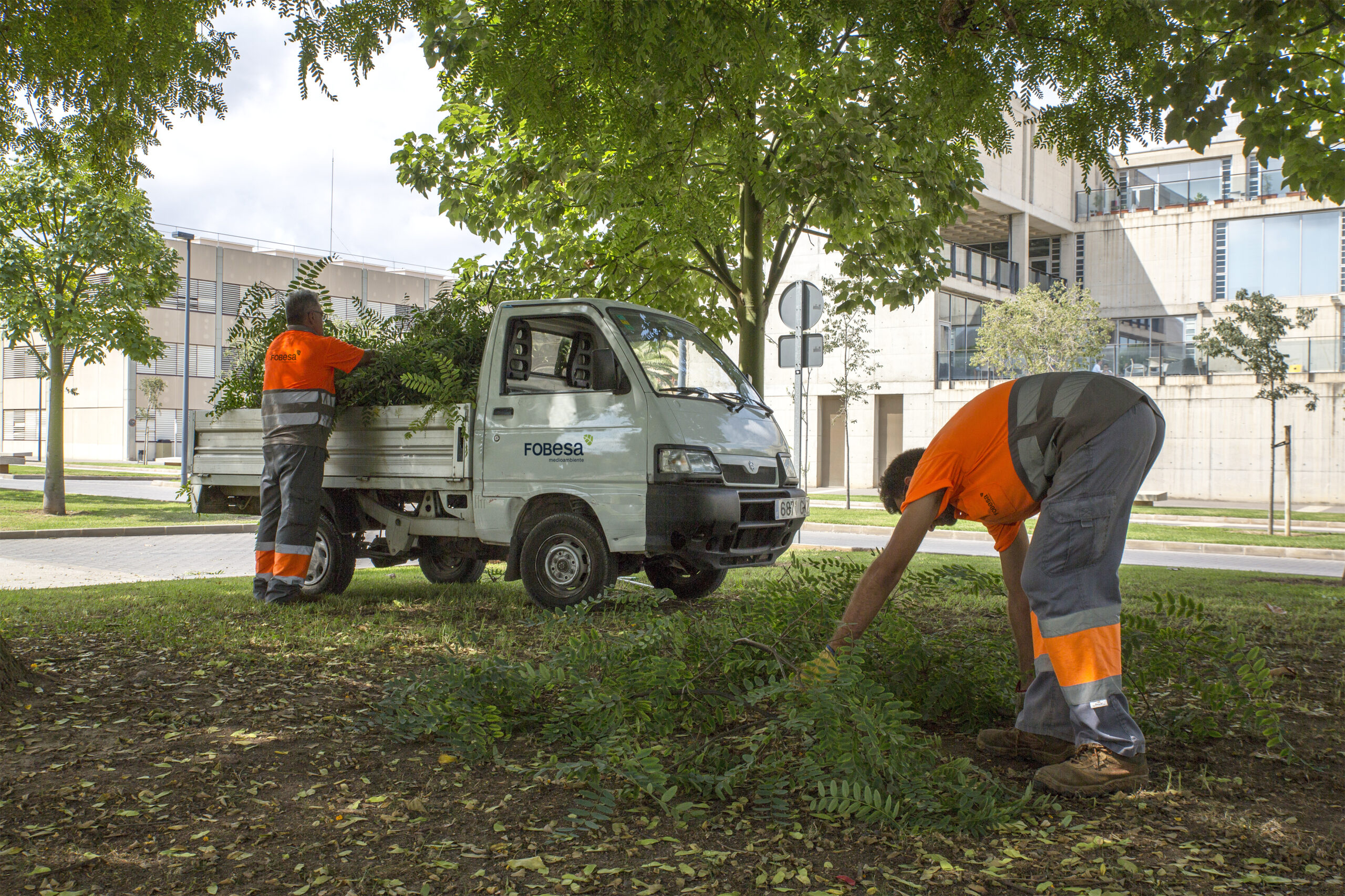
- The solution is a clear commitment to the circular economy, which allows for obtaining high energy and fertilizer products without emitting greenhouse gases.
- The “Biocarbons of the Mediterranean” project also seeks to put an end to the problem of pruning waste accumulation that affects some areas of the Valencian Community.
The environmental management company Fobesa–Fovasa continues to invest in new technologies to strengthen its path towards sustainability and the circular economy. Currently, among other initiatives, the company is working with Ingelia, a Valencia-based company that has developed an advanced treatment for organic waste, capable of transforming pruning debris and other green waste into high-quality biochar and a liquid with excellent fertilizing capacity.
The project, known as “Biocarbons of the Mediterranean”, stems from the environmental commitment of the Grupo Gimeno company to find new ways to give a second life to waste, as well as the need to manage the growing volume of pruning waste generated in Valencian homes.
Thanks to this solution, pruning waste and other plant residues are returned to the market in the form of high-quality products, such as biofuels, biomaterials, or fertilizers for soil recovery.
One of the main advantages of this innovative technology lies in the fact that the waste transformation process is considerably shorter than composting, taking only four hours compared to the four months required to obtain compost from the same amount of plant matter. Furthermore, this process accelerates the natural formation of carbon, preventing the emission of greenhouse gases into the atmosphere, as hydrothermal carbonization fixes the carbon.
This project—with which Fobesa-Fovasa reaffirms its environmental commitment and its dedication to clean technologies and the circular economy—joins the company's efforts to optimize the management of organic waste. Progress is being made in this area thanks to the implementation of the organic waste container, whose contents are primarily used to produce compost.
Related news


Need help?
We are here for whatever you need