


16 October 2025
Facsa and Fobesa reinforce their commitment to sustainability and climate action at the Ecoforum
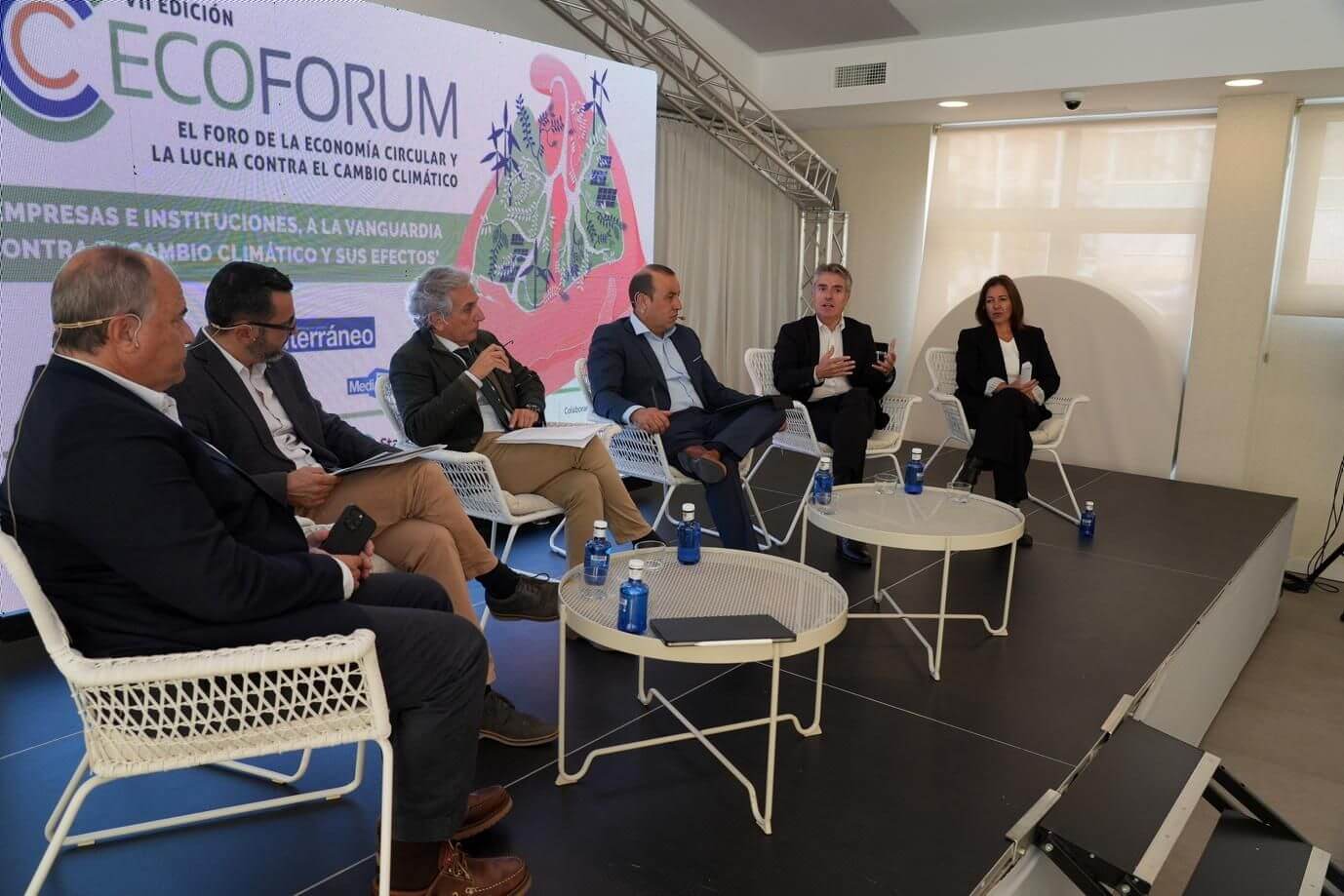
The Ecoforum has once again established itself as a leading forum for reflection and the exchange of experiences on sustainability, the circular economy, and environmental management. Its seventh edition, held this Wednesday under the theme "Companies and Institutions at the Forefront of the Fight Against Climate Change and its Effects," featured prominent participation from FACSA and Fobesa , who shared their vision and experience on how to address the impacts of climate change in key areas such as water and waste management.
During his speech, Facsa's CEO, Jose Claramonte, presented the study "Impact of extreme weather events on water resources. Challenges and mitigation strategies," prepared by the company to analyze the effects of increasingly frequent phenomena—such as prolonged droughts, torrential rains, and heat waves—on water availability and quality.
Claramonte stressed the urgent need to move “from reaction to action” to anticipate the climate scenarios already affecting areas like the province of Castellón. “Doing nothing is neither an option nor a solution. We must be proactive and not wait until we have to repair the damage,” she stated, while also insisting that the current water system was designed for “a past climate” and requires a thorough overhaul.
Among the report's conclusions, the head of Facsa highlighted the need to modernize infrastructure, strengthen water governance, guarantee stable funding, and promote education and public awareness. He also presented a ten-point plan for water resilience, which includes measures such as redesigning infrastructure to withstand extreme events, implementing early warning systems, and restoring river ecosystems and wetlands.
For his part, the general manager of Fobesa, Juan Pablo Mateo, participated in the round table Public-private collaboration in an emergency, where he shared the company's experience in waste management after the DANA storm of October 29, 2024, an episode that tested the sector's response capacity.
Mateo explained that the amount of waste generated during the emergency was “brutal” and of “very diverse types,” which has made its treatment and recovery difficult. “The public is still not fully aware of the magnitude of the waste managed in that catastrophe,” he noted, emphasizing the solidarity and coordination shown by companies and local authorities.
She also emphasized the importance of establishing clear protocols and defined roles to respond more quickly and effectively to future emergencies. "With planning and cross-departmental communication, everything works better," she concluded.
The participation of Facsa and Fobesa in this forum has reaffirmed the companies' commitment to sustainability, innovation and collaboration between the public and private sectors as fundamental pillars to move towards a more resilient and environmentally friendly future.
Related news


Need help?
We are here for whatever you need