


16 March 2021
The Coastal Authority commissions the joint venture Gimecons-SATO to carry out the stabilization works on the coastal front of Almenara and La Llosa
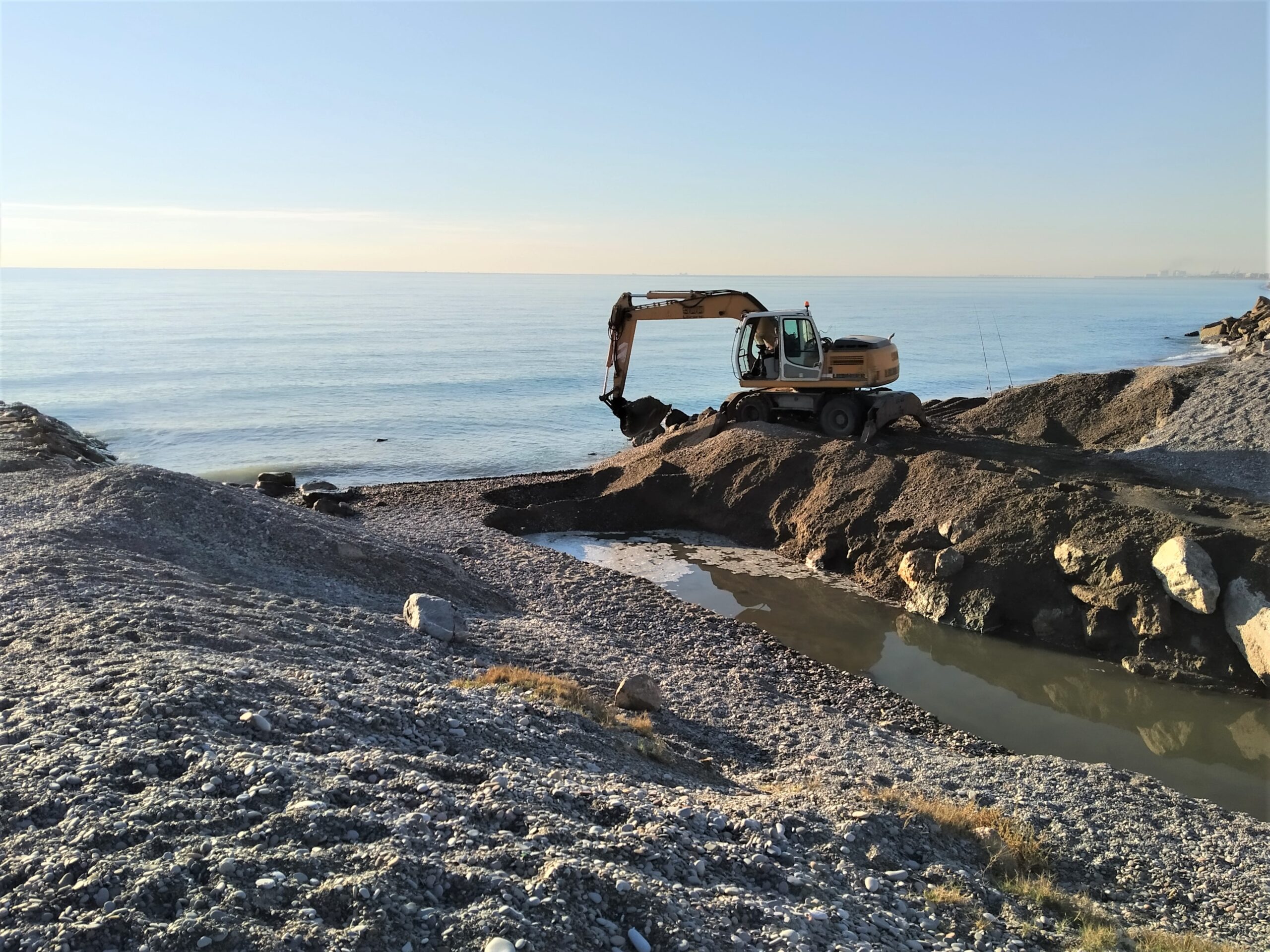
- The project, which has a budget of almost six million euros, seeks to prevent the erosion of the coastline of the municipalities.
The Ministry for Ecological Transition and the Demographic Challenge, through the Directorate General for the Coast and the Sea, has awarded the contract for coastal stabilization works in Almenara and La Llosa to the joint venture formed by Gimecons and SATO (of the OHL Group) the stabilisation works on the coastal front of Almenara and La Llosa. A project in great demand among the residents of these Castellón towns, where the action of the sea has caused a significant regression of the coastline in recent years.
Thus, the main objective of the project – which will begin after the summer period and will last 12 months – is to carry out a series of works that reduce the length of the shoreline tilting and achieve an equilibrium position for it.
In the northern area, will be built four new groynes and the groynes currently at the Gola de La Llosa will be extended, in order to protect the urban area of Barrio Mar from the action of the sea.
Similarly, an extension of more than 205,000 m² will be carried out.3 of gravel will be spread to form the cells between groynes and the current protective rock armour south of the river mouth will be removed.
On the other hand, in the southern area, the existing groynes at the Gola de Queralt will be extended and 50,000 m3 of gravel and 25,000 m3 of sand will be added, immediately downstream of the southernmost Gola de Queralt groyne.
This project has a favourable Environmental Impact Statement, which imposes preventive and corrective environmental measures, among which are respect for the protected areas of the Natura 2000 Network (Marjal de Almenara and Alguers de Borriana-Moncofa) and environmental monitoring so as not to affect Posidonia oceanica or the Kentish plover.
Related news


Need help?
We are here for whatever you need